

Delivery Experience, Retail & CPG
Time Slot Management: 2025 Guide for Logistics Teams


Key Takeaways
- Failed deliveries significantly impact costs and customer satisfaction, with 16% of customers abandoning retailers after just one incorrect delivery and re-delivery costs averaging $15 per order.
- Time slot management systems enable customers to choose convenient delivery windows while helping businesses optimize resource allocation, improve dispatch planning, and reduce operational costs.
- Real-time visibility and tracking capabilities are crucial for customer satisfaction, with 87% of consumers wanting to track deliveries and 96% saying positive delivery experiences encourage repeat purchases.
- Locus’s Delivery Linked Checkout feature optimizes fleet utilization through dynamic pricing and incentives, helping businesses balance customer convenience with operational efficiency in time slot management.
Gone are the days when the customer would wait for weeks or days to get a parcel delivered. Speed, convenience and predictability are the new rules. The customer’s demand for faster and same-day deliveries is increasing by the day, and businesses are investing in smarter logistics solutions to fasten their delivery processes. But, fast delivery isn’t enough to satisfy the customer.
Even if your order reaches the customer quickly, it doesn’t satisfy the customer if it meets a locked door. Failed deliveries are a major last-mile challenge. Missing a delivery not only leaves the customer unhappy, but it also increases the total cost of logistics for the business.
Given that the consumer needs to be physically present to receive the package or service at a certain time period, the room for error for last-mile delivery companies shrinks considerably as compared to regular delivery and e-commerce apps. This is what makes time slot management systems the make-or-break difference for long-term growth.
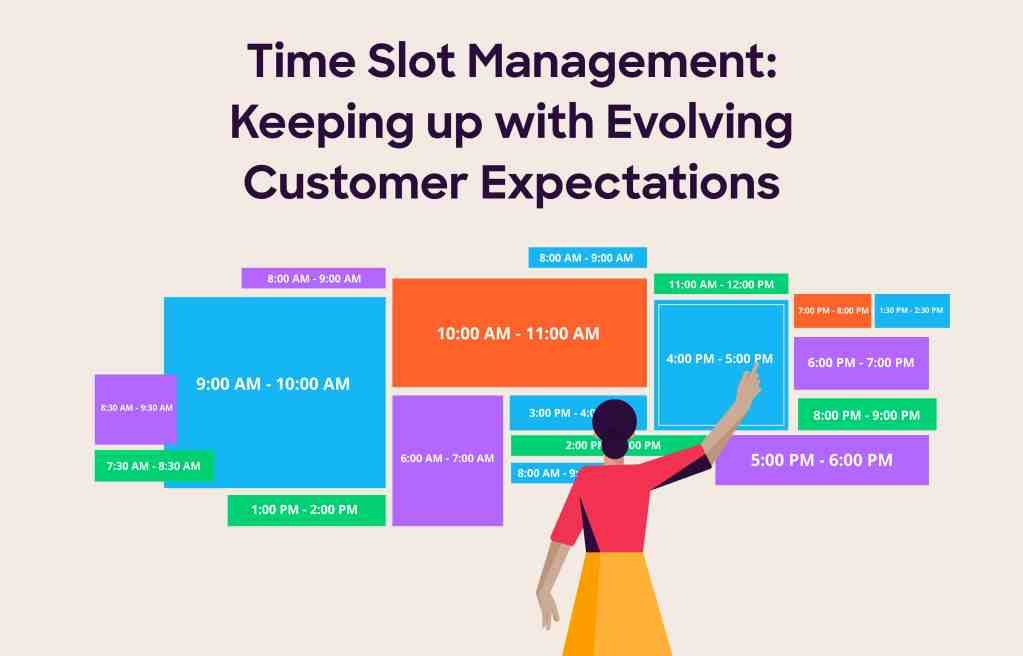
This new-age economy has seen intense competition to capture the largest slice of the pie. That’s largely because today’s consumers are a lot more tech-savvy, more well-informed, and highly value-conscious. They will not hesitate to choose the service that offers the greatest convenience and value for their money, which makes the competition even more fierce.
Take the home services industry for example, which began to gain popularity right after the e-commerce boom. The market is projected to grow by $4730.31 billion during 2021-2025. Apart from offering the lowest possible rates for their services, players must also ensure that the services being offered are of high quality, and delivered at a time convenient to the consumer. While they might be open to receiving their weekly groceries the next day, it might not cut the mustard if they have a leaky faucet or a broken chair that needs urgent fixing.
According to a 2021 survey by MetaPack, 96% of consumers said that a positive delivery experience would encourage them to shop with a retailer again. Additionally, 89% of consumers said that they want retailers to provide a range of delivery options, and 87% said that they want to be able to track their delivery in real-time. Therefore, it is essential that your order reaches the customer when it is suitable for the customer or someone on his/her behalf to receive it at the address.
A time slot management system allows customers to choose delivery timings based on their availability and convenience. It improves customer satisfaction and helps you plan deliveries efficiently. Many companies in e-grocery, white glove furniture delivery, home services, retail, pharmacy, and other sectors are now offering convenient delivery windows to their customers. A dynamic time-slot management system improves logistics planning and execution in several ways.
What is a time slot management system and why is it important?
A time slot management system is a software application or platform that helps businesses manage and optimize the allocation of appointments, reservations, or services over a given period. This system typically allows customers or clients to book time slots for specific services or appointments online or through a mobile app, based on their availability and preferences.
Needless to say, time slot management systems are the bedrock for promoting customer satisfaction. Consistently providing services at preferred time slots shows that the company is serious about putting the customer at the heart of their operations. It also promotes savings, by improving the first attempt delivery rate of the services provided. This translates into savings on time, fuel and resources towards revisiting consumers the second time around.
Implementing time slot management practices manually is a less-than-ideal approach, especially for companies looking to scale up rapidly. Manually carrying out these tasks are far less efficient and more resource-intensive. Not to mention they do not provide the same level of visibility over the supply chain as time slot management systems. They provide real-time updates on the status of a task assigned to executives, reducing the back and forth between supervisors and executives.
How do time slot management systems work?
Time slot management systems are designed to streamline and optimize the scheduling and allocation of appointments, reservations, or services within a business or organization. These systems typically provide a centralized platform where customers can book appointments or reserve services based on availability and preferences.
The system then uses algorithms and rules to assign the available time slots to the appropriate service executives or resources based on skill sets, availability, and proximity. This helps ensure that customers are matched with the best possible service provider at the most convenient time for them.
Additionally, time slot management systems can allow real-time monitoring and adjustment of schedules, enabling businesses to respond quickly to changes or cancellations and allocate resources more efficiently. This can result in increased productivity, reduced wait times, and improved customer satisfaction.
How does time slot management improve your logistics?
Streamlines dispatch planning and processes
Offering preferred delivery windows may make the customers happy, but it makes logistics operations more hectic than it already is. With the help of timeslot delivery schedules, logistics managers can plan daily and even hourly dispatches more efficiently. Shippers can plan loading and unloading to suit specific requirements, avoid traffic and road congestion at peak times and optimize capacity utilization by ensuring staff availability coincides with the arrival and dispatch of goods.
Timeslot management also allows setting a sequence for shipments from booked time frames, optimizing dispatch planning and execution processes. Carriers can book their preferred time slots via an electronic schedule on a cloud-based platform, reducing truck waiting times and the need for manual intervention.
Increases First Attempt Delivery Rate
The cost of missed or incorrect deliveries is something a business cannot afford. According to a survey by Voxware, 16% of customers will abandon shopping with a retailer altogether if they receive an incorrect delivery once, while 14% will do so if they receive a late delivery just one time. Moreover, the average cost of re-delivery is $15/order and the follow-on cost for a second attempt delivery is equivalent to delivering three packages.
A time-slot delivery system helps you reduce the number of missed or failed deliveries and achieve a higher First Attempt Delivery Rate. By delivering at the customer’s preferred delivery window, you improve customer satisfaction and save the added costs involved in storing, shipping, and delivering undelivered parcels.
Improves visibility in logistics
Implementing time-slot based delivery helps logistics managers gain more control over logistics activities, communicate better with customers and stay on top of on-ground operations to ensure timely and efficient delivery of orders.
Innovative logistics solutions such as time-slot management offer a dashboard view of the entire last-mile delivery process, including dynamic routing, predictive alerts, accurate ETAs and live tracking of order status, thereby bringing in greater visibility in the system and allowing managers to take effective measures in case of unnecessary delays. This helps in delivering orders at the customer’s doorstep at the time slot they demand.
Better customer experience
On-time delivery and customer satisfaction go hand in hand. When the customer receives the order not just in time, but also at the preferred delivery slot, he/she feels more valued by the brand and is more likely to continue with the same brand. Efficient last-mile fulfillment improves the overall buying experience, leads to higher customer satisfaction, and improved brand loyalty.
Locus’s time slot management offers a centralized communication platform with which the most varied logistical requirements can be depicted. Locus’ time slot management system paves the way to optimized truck handling and thereby saves time and costs.
- Increased transparency and improved planning capability
- Minimized waiting and throughput times, prevention of congestion
- Improved First Attempt Delivery Rate
- Easier and efficient coordination for all those involved in last-mile operations
- Uniform utilization of loading resources/capacities
- Predictive resources planning
- Quicker on-ground operations, for example, through paperless procedures
- Better vehicle utilization with the integration of empty containers, pallets, and returnable packaging
- Reduced costs of inventory and reverse logistics
- Complete integration in a dynamic, real-time and on-demand supply system.
Offer next-gen checkout solutions with Locus’ Delivery Linked Checkout
Locus’ Delivery Linked Checkout feature can help businesses drive next-gen checkout experiences by offering a range of features that maximize cost-efficiency and fleet utilization. By incentivizing customers to choose the least sought-after slots through dynamic pricing, businesses can better allocate their resources and reduce the number of free delivery slots.
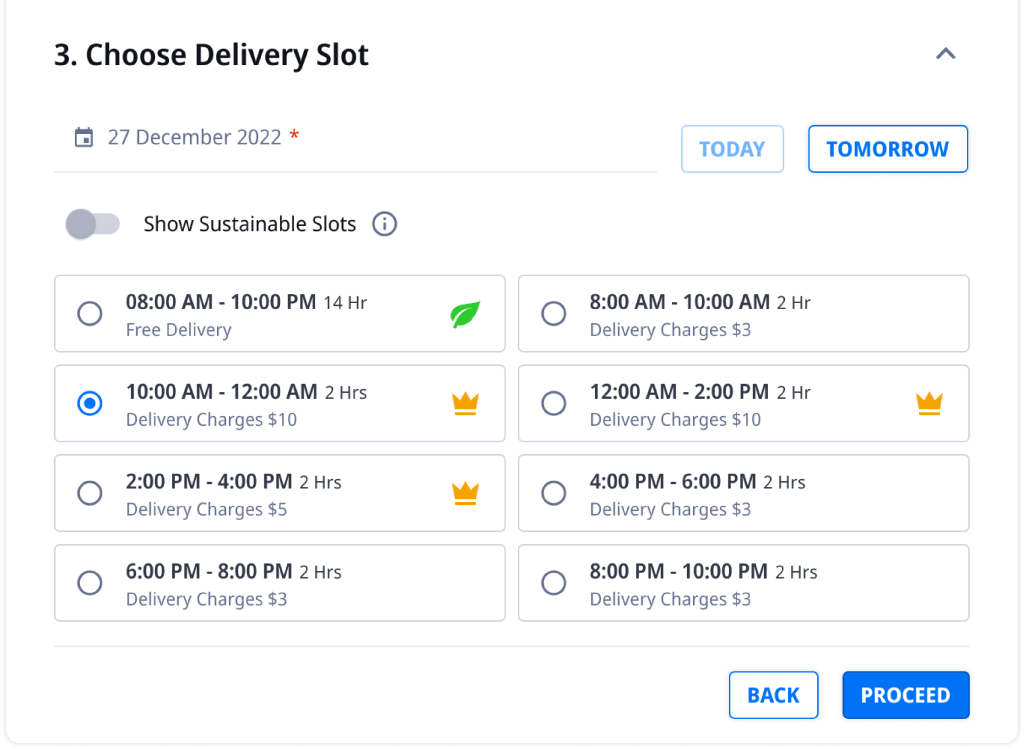
Longer delivery windows can also be offered to encourage customers to choose them over shorter windows, further optimizing resource allocation. Additionally, variable pricing based on customer behaviors and most sought-after slot timings, as well as discounted delivery pricing with cashbacks or incentives, can help incentivize customers to choose unpopular delivery slots, further maximizing fleet utilization. With Locus, businesses can streamline their delivery operations while providing exceptional customer experiences.
Customer preferences and buying behaviors are changing dramatically and modern supply chain enterprises need to respond to such dynamic demands by improving their logistics services. Whether you’re operating an E-commerce platform, running a hyperlocal delivery service, or offering third-party logistics solutions, time-slot management is a strong tool that can improve your delivery planning and processes while helping you deliver at the customer’s command.

Mid-mile Logistics
Mid-Mile Logistics Challenges: How To Overcome them?

Jul 1, 2025
Key Takeaways In the intricate world of business and supply chains, middle-mile logistics emerges as the linchpin that governs the very pace of the process. It’s the domain where precision and coordination between delivery drivers and operation managers become paramount, for it’s here that products embark on a journey to multiple fulfillment locations, ultimately determining […]
Read more
Route Optimization
How to Optimize Beat in Sales for FMCG Distribution Success

Jul 1, 2025
Key Takeaways Indian Retail is a Buyer’s game today. In E-Commerce as well as offline modern trade, consumers are truly the king, with every tick of the clock bringing new choices. Hence it has become both, vital and challenging for enterprises to be close to the end consumer. An efficient distribution system, which reduces order […]
Read moreInsights Worth Your Time


SUBSCRIBE TO OUR NEWSLETTER
Stay up to date with the latest marketing, sales, and service tips and news
Time Slot Management: 2025 Guide for Logistics Teams