

General
Types of Truck Freight Shipping: FTL, LTL, PTL Explained


Key Takeaways
- Full Truckload (FTL) shipping provides the fastest transit times and dedicated space but comes at a premium cost, making it ideal for time-sensitive or high-value shipments.
- Modern truckload optimization requires advanced analytics and AI-powered solutions to effectively manage costs, routes, and capacity across different shipping modes.
- Empty miles and inefficient load planning significantly impact shipping costs, making automated load balancing and dynamic routing essential for operational efficiency.
- Locus’s intelligent routing platform optimizes vehicle loads and routes by considering 180+ real-world constraints while providing analytics-driven insights to reduce costs and improve delivery performance.
In a world where Amazon is the new storefront and everyone and their uncle suddenly loves to play SimCity with their supply chain, understanding the nuts and bolts of truckload types is as crucial as getting the latest iPhone before it sells out. The global trucking industry market size has suppressed $285 billion in 2022 and is said to reach $430 billion by 2032. Retailers should find ways to optimize truckloads to reap benefits. However, trucking industries have many business models they operate by.
Let’s delve into the three major types of truckloads: Full Truckload (FTL), Partial Truckload (PTL), and Less than Truckload (LTL).
What is Full Truckload (FTL)?
When we talk about Full Truckload (FTL), we’re talking Beyonce headlining her concert – the truck is all yours. No sharing. If you’ve got enough goods to fill up a truck, or if your goods are time-sensitive, fragile, or valuable, Full Truckload (FTL) is the showstopper choice. In the cut-throat era of next-day deliveries, Full Truckload (FTL) offers the fastest transit times: a seamless journey from A to B with no detours or delays. But, remember, just like getting the VIP treatment at a concert, it doesn’t come cheap.
What is Partial Truckload (PTL)?
Partial Truckload (PTL) is for those on the cusp. Think of it as the middle child who shares the traits of the oldest and the youngest. You’ve got more goods than you can squeeze into an Less than Truckload (LTL) shipment but not enough to justify the expense of a Full Truckload (FTL). The beauty of Partial Truckload (PTL) is that it’s cost-effective and flexible. It allows for fewer handling instances, reducing the risk of damages. Think of it as carpooling for cargo – you share the ride, and so you share the costs.
What is Less than Truckload (LTL)?
Less than Truckload (LTL) is the democracy of shipping. It’s all about sharing space. If your shipment is relatively small, Less than Truckload (LTL) allows you to pay for only the portion of the truck that you’re using. It’s like a potluck dinner – everyone brings something, and we all share the space. However, sharing has its drawbacks. Your shipment will be stopping at multiple places to pick up and deliver other loads, so the delivery times are longer. Not ideal if you’re racing against the clock. Now that you know the difference, you can opt what suits your business objective.
So now that we have our stars on the stage, how do we direct them for an award-winning performance? How do we optimize these loads? Typically supply chain managers at shipping companies would resort to cost cutting strategies and use of legacy solutions. However, with supply chain challenges mounting, a legacy solution might not cut it. Shippers need to leverage automated and intelligent solutions to truly optimize the supply chain and impact the bottom line in a positive way.
Optimizing the Loads with Locus
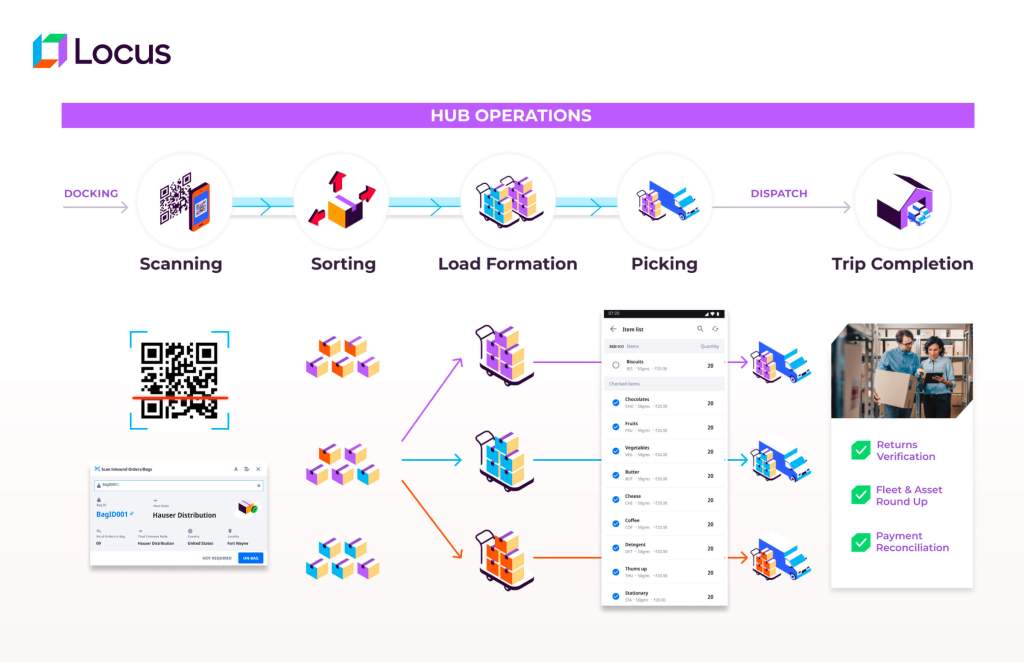
Automated load balancing and sorting:
Implement advanced first-in-last-out (FILO) strategies within distribution hubs, utilizing machine learning algorithms. This approach dynamically balances the load and autonomously sorts packages based on a variety of constraints like: zone, address, package contents and more significantly reducing processing time and enhancing operational efficiency.
Vehicle load optimization:
Deploy cutting-edge optimization algorithms in dispatch operations to achieve maximal volumetric and economic efficiency. By intelligently assigning orders to trucks with respect to their capacity and current load, the system ensures optimal resource utilization, thus minimizing operational costs.
Route management solution:
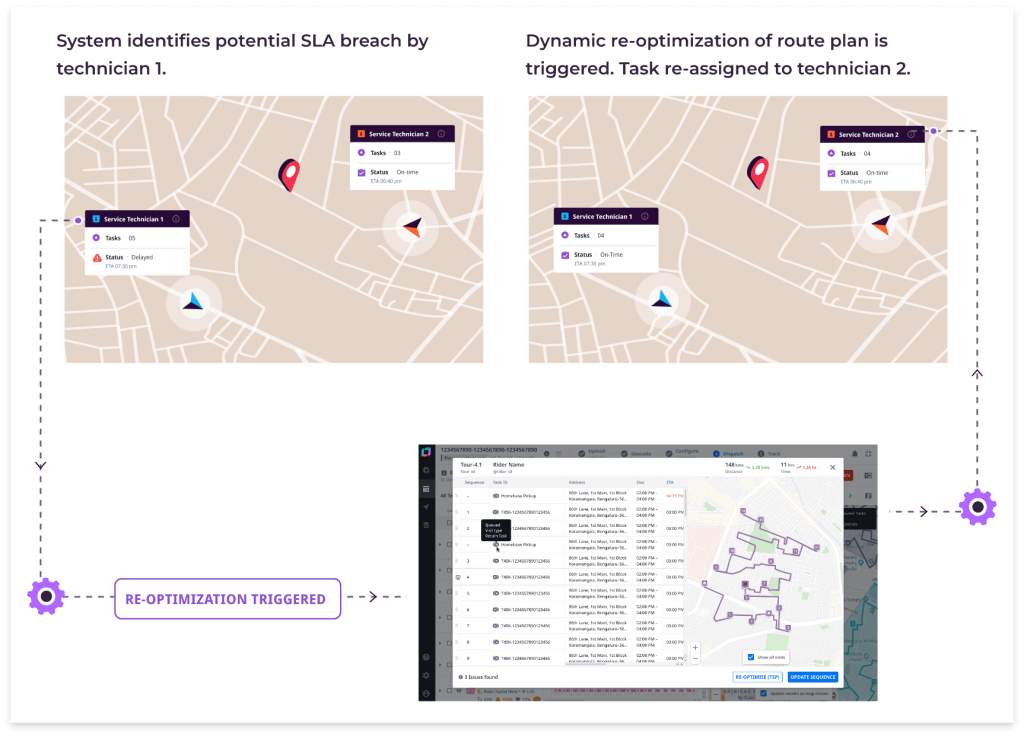
Use advanced software to plan your routes and loads in a way that minimizes empty miles. Nothing grates more than the sight of an empty truck rumbling down the highway. Locus’ smart routing solution accounts for dynamic routing which takes into account 180+ real world constraints to chart out the most economical route for drivers. The key here is to manage returns seamlessly. With smart routing solutions like Locus, shippers can plan delivery and return with the same resource/vehicle, therefore eliminating empty miles.
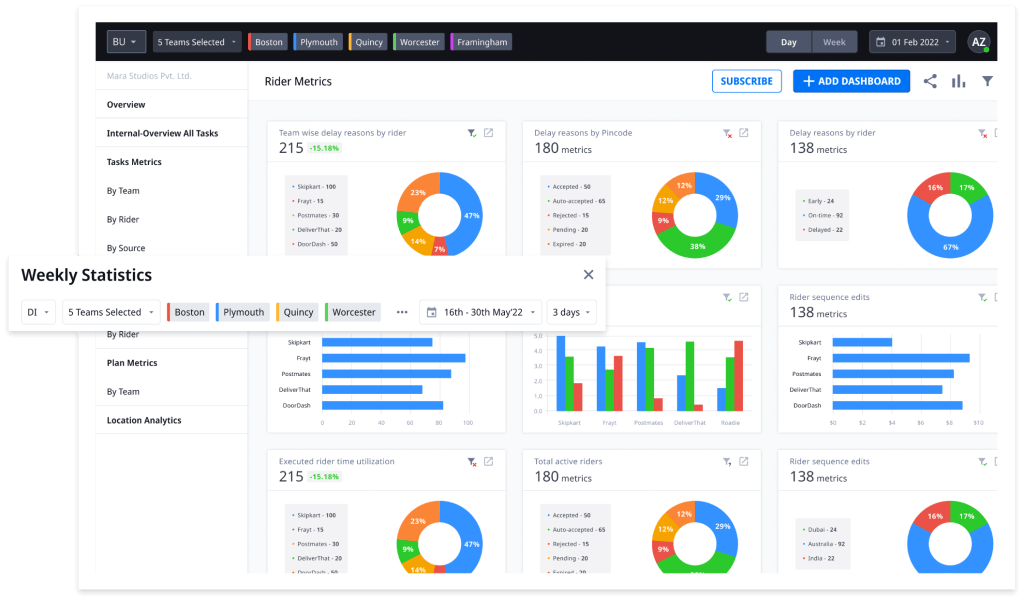
Advanced analytics solution:
Harness the power of AI to track and analyze your shipping data. Tech is not just for Tesla, folks. Use predictive analytics to forecast your shipping needs and manage your resources effectively. Analytics is very much necessary to enhance supply chain operations, especially in the last mile. The last mile is riddled with so many problems, collecting data is just the first step in improving its performance. Locus’ advanced analytics solution converts last mile post execution data into actionable insights through dashboards. These dashboards provide shippers with multiple insights on cost, CO2 emissions, fuel consumption, driver performance and many metrics.
Carrier management solution:
Don’t be shy to haggle. By negotiating rates and contracts with carriers, you can secure better deals and services. A robust carrier management solution is a must for shippers to find the right carrier that aligns with their business objective. Locus third party delivery solution, ShipFlex provides shippers access to a large carrier network. This helps them find every kind of transporter that meets the necessary parameters like SLA and cost.
The best part about ShipFlex is that the entire carrier/transporter selection process is done via automation.
With the help of Locus’ rules engine, shippers can set up rules for each type of order based on multiple parameters such as—distance, weight, size, price, geo, etc. to assign to the suitable carrier and the system will automatically do this for all future orders. This also helps shippers reduce favoritism from the last mile dispatcher towards certain carriers in exchange for kickbacks.
In the new world order of supply chain optimization, every cube of space, every mile, and every minute counts. Whether you’re sending a truckload of gadgets or a partial load of gourmet popcorn, you need to think like a tech mogul—squeezing efficiency out of every square inch and every second.
It’s about a holistic approach that considers costs, environment, and customer satisfaction. It’s about driving efficiency, quite literally. So buckle up and let’s hit the road to optimization!
Sources:
https://www.gminsights.com/industry-analysis/freight-trucking-market

CEP and 3PL
Courier Dispatch Challenges: Common Problems and How to Solve Them

Aug 6, 2025
Explore common courier dispatch challenges, delays, high costs, and visibility gaps and learn proven solutions like dynamic route planning and real-time tracking.
Read more
Transportation Management System
Returns Management Is the Ultimate Test for Your TMS. Here’s Why

Aug 19, 2025
Learn why returns management is now the true measure of supply chain agility, and how modern logistics leaders are adapting.
Read moreInsights Worth Your Time


SUBSCRIBE TO OUR NEWSLETTER
Stay up to date with the latest marketing, sales, and service tips and news
Types of Truck Freight Shipping: FTL, LTL, PTL Explained