

General
What Is Vehicle Routing and Why Does It Matter in 2025?

Key Takeaways
- Vehicle routing determines how delivery tasks are assigned to vehicles based on constraints like capacity, time windows, and route efficiency.
- Poor routing leads to high fuel costs, delivery delays, and low driver productivity, especially in complex, high-volume networks.
- The Vehicle Routing Problem (VRP) is a multi-variable logistics challenge that requires algorithmic and AI-driven solutions.
- Enterprises use a mix of static, dynamic, time-window, and zone-based routing strategies to balance cost and service-level targets.
- Routing impacts core KPIs: SLA adherence, fleet utilization, fuel usage, and route completion rates.
- Modern routing relies on integrated platforms that connect planning, dispatch, live tracking, and analytics.
- Locus solves routing at scale by combining constraint-aware route generation, real-time replanning, and fulfillment-driven dispatch, all within a single orchestration platform.
How do you dispatch high-priority orders during peak hours without disrupting existing routes? Can your fleet cover more stops without exceeding fuel budgets or driver shift limits? What’s the fastest way to adjust routes mid-route when delays or cancellations occur?
These are not abstract questions, they reflect the daily decisions logistics leaders make to stay competitive. As networks expand and customer expectations tighten, route planning is no longer just about coverage. It’s about precision, adaptability, and cost control at scale.
Vehicle routing determines how delivery tasks are distributed across a fleet based on constraints like capacity, time windows, driver availability, and location accuracy. When managed effectively, it improves delivery speed, reduces idle time, and prevents SLA breaches.
In this blog, we unpack the building blocks of vehicle routing, how it works, why it’s complex, and how modern platforms like Locus turn it into a scalable advantage for enterprise logistics.
What Is Vehicle Routing?

Vehicle routing is the process of determining which vehicle handles which set of deliveries, and in what sequence, based on operational constraints such as capacity, distance, delivery time windows, and driver availability. It’s a foundational logistics function that directly impacts delivery timelines, resource utilization, and service consistency.
In enterprise logistics, routing decisions must account for multiple overlapping variables. A grocery chain, for instance, might need to send temperature-sensitive items in refrigerated trucks while ensuring time-definite deliveries to urban micro-fulfillment centers. These decisions must also factor in real-time traffic, driver shifts, and local compliance requirements.
Unlike basic route planning tools that rely on static templates, vehicle routing systems continuously evaluate order-specific requirements against fleet capabilities and network conditions. This enables dynamic assignment and rerouting across first-mile pickups, hub transfers, and last-mile drops.
By connecting routing logic to fulfillment priorities and real-world constraints, enterprises can reduce miles per delivery, improve route density, and meet customer expectations consistently.
Why Vehicle Routing is Important in Modern Logistics
Routing decisions now directly influence how logistics teams manage delivery speed, cost, and resource allocation, especially in environments with variable demand and tight service windows. As operations grow more fragmented, the ability to match the right order with the right vehicle and route is critical to maintaining efficiency at scale.
A cold chain logistics provider in Indonesia faced exactly this challenge while distributing perishable goods across Java. With multiple vehicle types, fluctuating daily order volumes, and strict time constraints for delivery, static routing approaches led to delays, overused assets, and planning inefficiencies.
Locus implemented a constraint-aware dispatch planning solution that accounted for product sensitivity, delivery urgency, vehicle availability, and traffic conditions in real time. The system grouped orders dynamically, matched them to suitable vehicle profiles, and sequenced stops based on SLA priority. As a result, the company reduced vehicle count by 25% and cut dispatch planning time by 70%, while maintaining delivery reliability across multiple zones.
For logistics teams managing complex fulfillment models, vehicle routing is no longer a downstream activity. It serves as a control mechanism that links planning decisions with on-ground execution, enabling faster response times, higher fleet productivity, and more accurate deliveries.
Understanding the Vehicle Routing Problem (VRP)
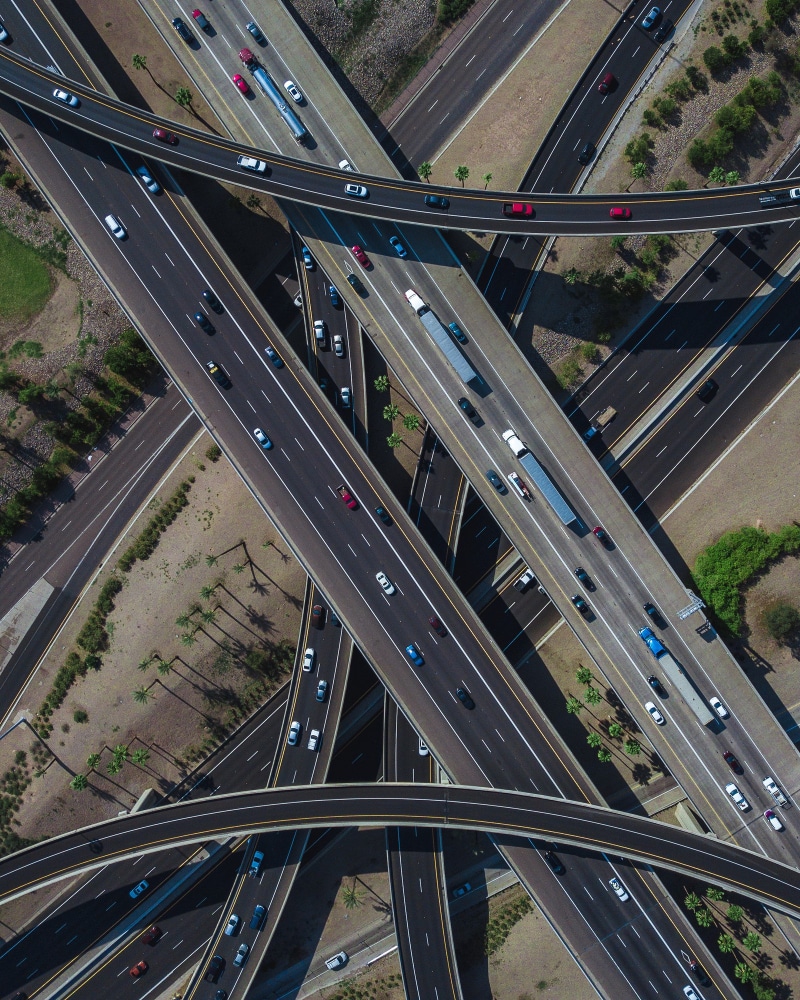
The Vehicle Routing Problem (VRP) addresses a fundamental logistics question: how can a business assign multiple deliveries to a limited fleet in a way that minimizes distance, cost, and time, while satisfying all operational constraints?
These constraints are rarely simple. In most enterprise delivery models, VRP becomes a multi-variable optimization task. Here’s what that often includes:
- Capacity limits: Each vehicle has a weight, volume, or temperature threshold.
- Delivery windows: Customers or store locations accept deliveries only during specific time slots.
- Route duration: Drivers must complete routes within shift hours or legal operating limits.
- Order priorities: Some orders require same-day fulfillment or SLA-based sequencing.
- Geographic clustering: Stops must be grouped by zones to reduce mileage and fuel consumption.
In high-volume networks, solving VRP also involves handling variants like:
- VRP with Time Windows (VRPTW) – Relevant in B2B retail drops and e-grocery fulfillment.
- VRP with Transfers – Useful when orders move between vehicles mid-route for zone optimization or load balancing.
Rather than producing a static plan, solving VRP means dynamically adapting to new inputs, like canceled orders, vehicle breakdowns, or road closures, while maintaining delivery efficiency.
Learn more about the Vehicle Routing Problem here.
How to Solve the Vehicle Routing Problem
Enterprise logistics networks solve the Vehicle Routing Problem using layered approaches that combine rule-based methods, optimization algorithms, and real-time data processing. The right method depends on delivery volume, operational complexity, and how frequently routing conditions change.
Key approaches include:
- Heuristic methods: These use predefined rules, like grouping the nearest stops or sequencing based on distance savings, to generate fast, functional routes. For example, a distributor might assign all deliveries within a 5 km radius to a single vehicle using a greedy heuristic model. While quick, these models don’t account for evolving traffic or SLA targets.
- Metaheuristic algorithms: Techniques like Genetic Algorithms and Tabu Search evaluate thousands of route permutations to identify the most efficient ones. They are especially effective for routing scenarios with overlapping time windows, multiple hubs, and load-balancing needs across regions.
- AI and machine learning models: Platforms like Locus use real-time data, traffic conditions, weather updates, on-ground delays, and driver availability, to update routes continuously. AI also detects patterns in route failures or SLA breaches and uses those signals to refine future planning.
For example, a same-day delivery operator in an urban market might start with zone-based route generation and then auto-adjust stops based on hourly demand spikes and driver progress.

Locus integrates these techniques within its dispatch planning layer, allowing teams to execute high-volume, constraint-sensitive routing with speed and precision.
Suggested read: Key Strategy to Optimize Delivery Routes
Common Vehicle Routing Strategies
Routing models vary based on delivery constraints, customer expectations, and operating regions.
5 Vehicle Routing Strategies – An Overview
| Routing Type | Best For | How It Works |
| Static | Fixed schedules | Predefined, repeat routes |
| Dynamic | High variability | Real-time routing using live data |
| Time-window | Restricted delivery hours | Sequenced to match recipient availability |
| Zone-based | Dense urban networks | Assigns drivers to specific geographic zones |
| Priority-based | Mixed urgency orders | Routes ranked by delivery priority |
Below are five specific strategies logistics teams use, often in combination, to meet operational targets:
- Static routing: Used in fixed-frequency delivery models, such as beverage restocking or school meal distribution. Routes are predefined and repeated on a schedule (e.g., every Monday and Thursday). While easy to manage, they offer limited flexibility when demand patterns shift.
- Dynamic routing: Ideal for high-variability networks like e-commerce and on-demand delivery. Routes are generated in real time using live order data, fleet availability, and traffic inputs. For example, a 3PL serving multiple retail clients may batch incoming orders every two hours and assign vehicles accordingly to maximize route density.
- Time-window routing: Applied when recipients, such as retail outlets or medical facilities, only accept deliveries during certain hours. Routing engines must sequence stops to meet each customer’s availability while staying within vehicle and driver constraints.
- Zone-based routing: Organizes deliveries by geographic clusters. Drivers are assigned fixed areas to minimize cross-zone travel and fuel use. This model is especially effective in cities with recurring high-density deliveries, such as fresh produce supply to local markets.
- Priority-based routing: Orders are ranked by delivery urgency or service tier. Express items are scheduled early in the route, while standard orders follow. A pharma distributor, for instance, may dispatch time-critical vaccines first, followed by less sensitive stock.
Locus supports all five models with the ability to combine them into adaptive routing frameworks, tailored by fleet type, order profile, and SLA tier.
Suggested read: Route Optimization for 3PLs
Key Benefits of Effective Vehicle Routing
Advanced routing systems generate measurable improvements across core logistics KPIs. Below are five outcomes frequently observed when routing is aligned with operational constraints and delivery goals:
- Reduced fuel usage and vehicle idling:
When deliveries are clustered by location and assigned to appropriately sized vehicles, total miles driven decreases. Fleets can reduce idle time during peak hours by reordering stops based on traffic and unloading time, resulting in significant drop in fuel spend within the year. - Higher first-attempt delivery success
Routing systems that factor in customer availability and preferred delivery slots reduce missed or delayed deliveries. A regional distributor of large appliances improved its first-attempt rate by reordering stops to match customer-confirmed delivery windows. - Optimized vehicle allocation
Fleet planners can match loads to vehicle types based on volume, refrigeration, or time sensitivity. This level of control enables dispatchers to reduce excess vehicle deployment while retaining delivery reliability during peak periods. - Increased driver productivity
Drivers complete more stops per hour when routes are designed to minimize left turns, avoid congested areas, and balance loading time across the shift. Route sequence logic directly improves route completion rates and shift adherence. - Stronger SLA performance
By sequencing priority deliveries early in the route and adjusting to real-time delays, logistics teams maintain delivery timelines more consistently. In cold chain networks, where SLAs often include both time and temperature compliance, routing accuracy directly impacts contractual performance.
Tools & Technologies Used in Vehicle Routing
Enterprise-scale routing depends on systems that can process constraints, update decisions in real time, and synchronize dispatch with order flow. The following technologies form the foundation of modern routing infrastructure:
- Constraint-based optimization engines: Unlike generic routing software, these engines account for delivery-specific variables such as vehicle capacity, customer time slots, loading sequences, and driver availability. Locus applies multi-constraint logic to generate efficient routes that meet both operational and customer-facing requirements.
- Live data integrations: APIs for traffic, weather, and road closures feed continuous inputs into the routing engine. For instance, when congestion builds up on a key arterial route, the system dynamically reorders remaining stops and recalculates ETAs.
- Centralized dispatch planning systems: Cloud-native dispatch platforms enable planners to schedule thousands of routes across hubs with full visibility into vehicle readiness, warehouse load times, and order cutoffs. Integration with order management systems ensures route plans reflect inventory status and fulfillment timelines.
- Driver interface applications: Mobile apps used by drivers serve as execution tools, providing navigation, delivery instructions, and proof-of-delivery capture. These apps also allow on-the-fly stop updates, enabling dynamic route adherence when orders are rescheduled or dropped.
- Analytics dashboards and exception trackers: Operations teams monitor route performance metrics, missed deliveries, early arrivals, fuel usage, and refine routing parameters using these insights. Exception dashboards help identify systemic issues such as recurring delays on specific routes or vehicle underutilization.
Best Practices for Implementing Vehicle Routing Systems
Effective routing implementation depends on operational clarity, clean datasets, and well-defined performance feedback loops. Below are five practices that consistently improve results in large-scale logistics deployments:
- Translate operations into explicit constraints
Capture granular routing rules from the field, vehicle dimensions, loading dock availability, turnaround times, customer receiving windows, and driver shift breaks. Encoding these constraints during setup ensures that routing outcomes align with how the network operates day to day. - Audit and enrich fleet and location data
Routing accuracy depends heavily on the quality of vehicle and stop data. Validate address coordinates, check for missing geotags, and map fleet details like refrigeration availability, floor clearance, and fuel capacity. Without this, even advanced routing engines generate unworkable routes. - Pilot test competing routing strategies
Before scaling a model network-wide, run side-by-side tests using static, dynamic, and hybrid routing strategies. Track core metrics such as cost per delivery, route completion rate, and delay incidents. Use those results to guide model selection, not assumptions. - Capture driver feedback as a routing input
Drivers frequently encounter delivery challenges not visible in dispatch data, blocked alleys, gated communities, or recurring delays at specific customer sites. Systematically collect this feedback and apply it to refine stop sequencing and route feasibility. - Select a platform that adapts with volume and geography
Look for systems that handle both centralized and multi-hub operations, and support routing variations across urban, semi-urban, and rural zones. The ability to scale across fleet sizes and adjust routing models during peak periods is essential for operational continuity.
Suggested read: 8 Points to Select Route Optimization Software
How Locus Solves the Vehicle Routing Challenge
Locus addresses vehicle routing as a multi-layered logistics problem, not just a map-based optimization task. The platform translates complex delivery variables, vehicle types, order attributes, driver schedules, and SLA constraints, into actionable routing plans that adapt in real time.
At the planning stage, Locus uses constraint-aware algorithms to generate route assignments optimized for delivery density, vehicle utilization, and time-window adherence. For example, in retail distribution, the system can cluster orders by delivery type and regional constraints, assigning refrigerated trucks to perishable loads while reserving smaller vehicles for express deliveries in high-traffic urban zones.

Once routes are dispatched, Locus continues to monitor live inputs such as driver location, traffic, and failed attempts. If a delay occurs or an order is canceled, the platform recalculates the route and redistributes stops across the fleet, without requiring manual intervention. Fleet supervisors receive updates through a control dashboard, while drivers get revised instructions through their app interface.
Locus also connects routing with upstream fulfillment. Orders can be automatically grouped and sequenced based on delivery priority, packaging requirements, and warehouse readiness. These flows reduce idle time and ensure accurate departure-to-arrival alignment.
The analytics layer captures performance data across each route cycle, fuel consumption, missed stops, early/late arrivals, and SLA breaches, giving teams the insight to refine routing models continuously.
Future of Vehicle Routing
Routing now plays a central role in logistics execution. As fulfillment cycles shorten and delivery models diversify, the ability to generate and adjust routes in real time is becoming a core operational requirement, not a secondary function.
Templates and static routing logic fall short in environments with shifting demand, variable delivery windows, and multi-vehicle fleets. Modern logistics teams need routing systems that evaluate cost, SLA urgency, driver availability, and on-ground disruptions simultaneously, and update plans without delay.
Locus enables that level of control. Its platform automates route generation based on live order flows, assigns deliveries with vehicle and resource constraints in mind, and dynamically adjusts stop sequences when delays, cancellations, or roadblocks occur. Combined with analytics on SLA performance and fleet efficiency, Locus helps teams refine routing logic with each cycle, rather than operating on fixed assumptions.
Schedule a demo to see how Locus transforms routing into a strategic capability for large-scale logistics.
Frequently Asked Questions (FAQs)
1. What is the difference between vehicle routing and route planning?
Vehicle routing assigns specific orders to vehicles while considering constraints such as delivery windows, vehicle type, and geographic zones. Route planning typically focuses on the stop sequence along a path. Routing decisions are broader and directly impact resource allocation and cost control.
2. How do routing platforms respond to late-order cancellations or delays?
Platforms like Locus monitor live order and fleet data. If an order is canceled or a stop becomes inaccessible, the system reassigns remaining deliveries across available vehicles and updates the driver’s route sequence immediately, without requiring dispatcher input.
3. How does routing software improve delivery accuracy?
Accurate routing begins with clean data, validated addresses, delivery time windows, and order-specific handling needs. Locus integrates these inputs to generate realistic, executable routes, minimizing failed attempts and ensuring deliveries match customer expectations and operational constraints.
4. Which industries use vehicle route optimization?
Route optimization is critical for industries with time-sensitive or high-volume deliveries, including retail replenishment, e-commerce fulfillment, CPG distribution, pharma logistics, and cold chain networks. Each industry applies routing logic tuned to its service models and delivery conditions.
5. How do logistics teams calculate ROI from routing systems?
ROI is measured using metrics such as cost per order, stop success rate, fuel consumption, idle time, and SLA compliance. Locus tracks these at the route and network level, giving teams a clear view of efficiency gains over time.

General
Courier Routes: Strategies to Maximize Speed, Coverage & Profitability
Jul 28, 2025
Learn what is a courier route? Its importance in 2025, key strategies to optimize courier routes and key aspects to look for in courier route planning software
Read more
General
What Is Routing Efficiency? A Guide to Smarter, Leaner Logistics – Locus
Jul 28, 2025
Routing efficiency helps cut costs, save time, and improve delivery KPIs. Learn how to measure and improve it effortlessly with software and best practices.
Read moreInsights Worth Your Time


SUBSCRIBE TO OUR NEWSLETTER
Stay up to date with the latest marketing, sales, and service tips and news
What Is Vehicle Routing and Why Does It Matter in 2025?