

Retail & CPG
What Is Retail Distribution? Strategy & Best Practices


Key Takeaways
- Adopt optimized routes with all-mile delivery planning to reduce last-mile transportation expenses by up to 20%, improving efficiency and profitability for retailers.
- Track shipments in real time to quickly resolve issues, prevent delivery delays, and improve customer satisfaction across diverse retail distribution channels.
- Measure inventory levels accurately within warehouses and distribution centers to minimize stockouts, reduce overstocking, and strengthen fulfillment efficiency across the retail supply chain.
- Use predictive analytics to forecast demand for high-turnover products, enabling proactive inventory planning, minimizing delays, and reducing overall operational risk in distribution.
- Simplify distribution with Locus, using AI-driven route optimization, automated dispatch, and real-time visibility to improve delivery reliability, cut costs, and scale operations effectively.
Rising logistics costs are forcing retailers to treat distribution strategy as a margin lever rather than a back-end process. According to McKinsey, nine in ten companies continue to face disruptions, with limited visibility beyond tier-one suppliers. For retail leaders, this lack of resilience directly impacts how efficiently products are distributed to stores, warehouses, and customers.
Retailers that rely on outdated distribution models face mounting costs and service delays. In contrast, leading brands are treating distribution strategy as a growth driver. Walmart’s store-fulfillment model reduces last-mile expenses, while Apple’s hybrid approach (exclusive stores plus selective retail partnerships) allows it to balance control with reach. Both illustrate how distribution choices directly shape financial outcomes and customer experience.
This blog explores proven retail distribution strategies with examples, what to expect from a distribution partner, and how Locus enables enterprises to streamline execution with AI-driven automation.
What Is Retail Distribution?
Retail distribution is the system retailers use to get products from manufacturers or suppliers into the hands of consumers. It covers everything from how goods are stored and transported to how they are delivered. Products then reach different channels such as supermarkets, e-commerce platforms, and brand-owned stores, where shoppers actually make their purchases.
According to NRF, over 70% of retail sales in the US still happen in physical stores, but most of those transactions are influenced by online browsing. This means distribution strategies must now connect online and offline channels seamlessly to meet customer expectations.
Key Components of Retail Distribution
Successful retail distribution relies on several interconnected components that keep goods moving efficiently from production to purchase:
- Manufacturers and Suppliers – The origin point of goods, supplying products to distributors, wholesalers, or retailers.
- Distribution Channels – The routes products take, such as direct-to-retail or via wholesalers. Modern strategies often use multi-channel or omnichannel approaches.
- Wholesalers and Distributors – Intermediaries that purchase in bulk, store goods, and resell smaller quantities to retailers, easing inventory pressure.
- Retailers – The final point of sale to consumers through physical stores, e-commerce sites, or hybrid setups.
- Logistics and Supply Chain – Warehousing, transportation, and inventory management systems that ensure timely, cost-efficient movement of goods.
- Channel Management – The coordination between manufacturers, distributors, and retailers, including pricing, promotions, and contractual terms.
- Marketing and Merchandising – Efforts that drive demand and shape how products are positioned across channels.
- Technology and Automation – Tools such as ERP, route optimization, and AI-powered demand forecasting that enhance visibility, efficiency, and scalability.
However, as retailers adopt more digital systems for logistics and fulfillment, protecting these operations from cyber threats is equally important. Learning how to prevent retail supply chain attacks helps safeguard data and maintain customer trust.
Types of Retail Distribution
Retailers adopt different distribution strategies depending on their target market, product type, and business goals. The three main types are:
- Intensive Distribution
- Products are made available through as many outlets as possible.
- Common for fast-moving consumer goods (FMCG) like snacks, beverages, and personal care items.
- Objective: maximize visibility and convenience for customers.
- Selective Distribution
- Products are distributed through a limited number of outlets in specific locations.
- Often used for products that require a certain level of brand positioning or customer service, such as electronics, fashion, or furniture.
- Balances reach with exclusivity, ensuring the brand maintains its image while still being accessible.
- Exclusive Distribution
- Products are sold through only one authorized retailer or distributor in a given territory.
- Common in luxury goods, automobiles, or high-end fashion.
- Helps maintain prestige, brand control, and strong retailer partnerships.
How Does Retail Distribution Work?
Retail distribution is a chain of steps that connect suppliers to customers. Each step depends on the one before it, so problems at any stage can cause delays and increase costs.
Step 1: Procuring Products From Reliable Suppliers
Retail distribution begins with procurement. Retailers secure goods from manufacturers or suppliers to keep pipelines flowing.
For example, during the COVID-19 pandemic, the food supply chain was under immense pressure to keep essential items available for consumers. Despite major disruptions in meat, dairy, and international shipping, staples like grains and fresh produce remained available thanks to strong supplier relationships and optimized logistics.
Reliable procurement practices ensure that products are consistently available on shelves or for home delivery. If this step is delayed or disrupted, it can cause ripples throughout the entire distribution process, leading to stockouts and increased costs.
Step 2: Storing Goods in Warehouses and Distribution Centers
After procurement, goods are inspected and stored in warehouses or regional distribution centers (RDCs). Products are positioned based on demand patterns.
For instance, leaders like Amazon use advanced robotics in its fulfillment centers to store and retrieve products, while most other retailers optimize with demand-based zoning and WMS tools.. High-demand items, like phone accessories and everyday essentials, are stored in accessible “fast pick” zones, allowing for quicker order picking and shipping.
Multi-brand retailers often deal with a variety of stock-keeping units (SKUs) and high turnover. For strategies on optimizing warehouse storage and fulfillment across brands, see the Locus e-book on multi-brand fulfillment.
Step 3: Choosing the Right Distribution Channels
At this stage, businesses decide how products will reach their customers. The right distribution channel ensures products are delivered quickly, efficiently, and cost-effectively.
Retailers and brands often choose between multiple channels, such as:
- Selling directly to customers via e-commerce platforms.
- Using third-party wholesalers or distributors.
- Employing brick-and-mortar stores for in-person sales.
Today, many retailers blend these approaches through omnichannel distribution, which integrates online and offline channels rather than choosing one. For example, buy online, pick up in store (BOPIS) has become a standard option, offering convenience while reducing last-mile delivery costs.
Step 4: Transporting Products to Stores and Customers
Once channels are chosen, products are moved from warehouses to wholesalers, retail outlets, or directly to customers. This often involves long-haul transport and last-mile fleets.
Example: Tesco in the UK uses large trucks for regional transfers and smaller vans for home deliveries, balancing efficiency with convenience.
Increasingly, many are also adopting electric vehicles and other green logistics practices to cut emissions and align with sustainability goals.
Yet for many retailers, relying on third-party carriers can create problems like limited visibility, manual selection errors, and inconsistent delivery quality. Exploring how shippers can streamline third-party carrier management highlights ways to overcome these hurdles and maintain service standards.
Step 5: Delivering Products to Shoppers
The final stage is when products reach store shelves or customer doorsteps. Apple illustrates this well: iPhones are available in Apple’s own flagship stores and also through select retailers like Best Buy, giving customers multiple access points without losing brand control.
Top 3 Retail Distribution Strategies With Real-World Examples
Retailers must choose the right strategy to deliver products efficiently while meeting customer expectations. The strategy often depends on factors like product type, target audience, and cost considerations. Let’s explore some common retail distribution strategies with real-world examples:
1. Direct-to-Consumer Strategy
This strategy focuses on selling products directly to consumers, bypassing intermediaries like wholesalers or retailers. It allows businesses to control the entire customer experience and retain higher margins.
Example: Warby Parker disrupted the eyewear market by selling directly to consumers through their website and stores. This direct-to-consumer model allowed them to offer affordable glasses without the markup from traditional retail channels.
2. Omnichannel Strategy
Omnichannel distribution integrates both online and offline channels, providing a seamless shopping experience across all touchpoints. Customers can buy online and pick up in-store, or shop in-store and have their purchases delivered.
Example: Walmart uses an omnichannel approach, fulfilling online orders directly from nearby stores. This reduces delivery costs and shortens delivery times, improving overall efficiency and customer satisfaction.
For more insights, explore Retail & CPG resources covering omnichannel strategies, delivery optimization, and retail logistics trends.
3. Wholesale Distribution Strategy
In this strategy, products are sold through wholesalers who then distribute to retail stores. It’s a good option for reaching a wide audience without having to manage numerous retail partnerships.
Example: Procter & Gamble (P&G) sells products like Tide and Pampers to wholesalers, who then distribute them to large retail chains like Target and CVS. This allows P&G to focus on manufacturing while adopting retail networks to reach consumers.
For a practical example in a specific industry, see how Middle East bottled water manufacturers use All-Mile delivery strategies to optimize routes, reduce costs, and enhance customer satisfaction in this Locus e-book.
What Should Your Retail Distribution Partner Have?
According to the 2025 MHI Annual Industry Report, supply chain leaders cite workforce, technology adoption, and inventory management as some of the top challenges impacting operations. This highlights the importance of selecting a distribution partner who can scale, optimize processes, and maintain efficiency.
| Partner Quality | Why It Matters |
|---|---|
| Scalability | Handles fluctuations in order volumes, including peak seasons, to maintain smooth operations and avoid delays. |
| Reliability & Timely Delivery | Consistently delivers products on time, maintaining customer trust and satisfaction across all channels. |
| Technology Adoption | Utilizes modern tools for real-time tracking, route optimization, and inventory management, improving visibility and efficiency. |
| Cost Efficiency | Optimizes transportation and operational costs without compromising service quality, helping businesses reduce overall logistics expenses. |
| Strong Communication & Coordination | Ensures seamless coordination between suppliers, warehouses, logistics teams, and retailers to resolve disruptions quickly. |
Simplify Retail Distribution With Locus
Retail distribution has become more complex. Products move from warehouses to stores, wholesalers, and customers. Modern technology helps make the process of coordination and delivery faster and more efficient.
Here is how it helps:
∙ All-Mile Delivery Optimization
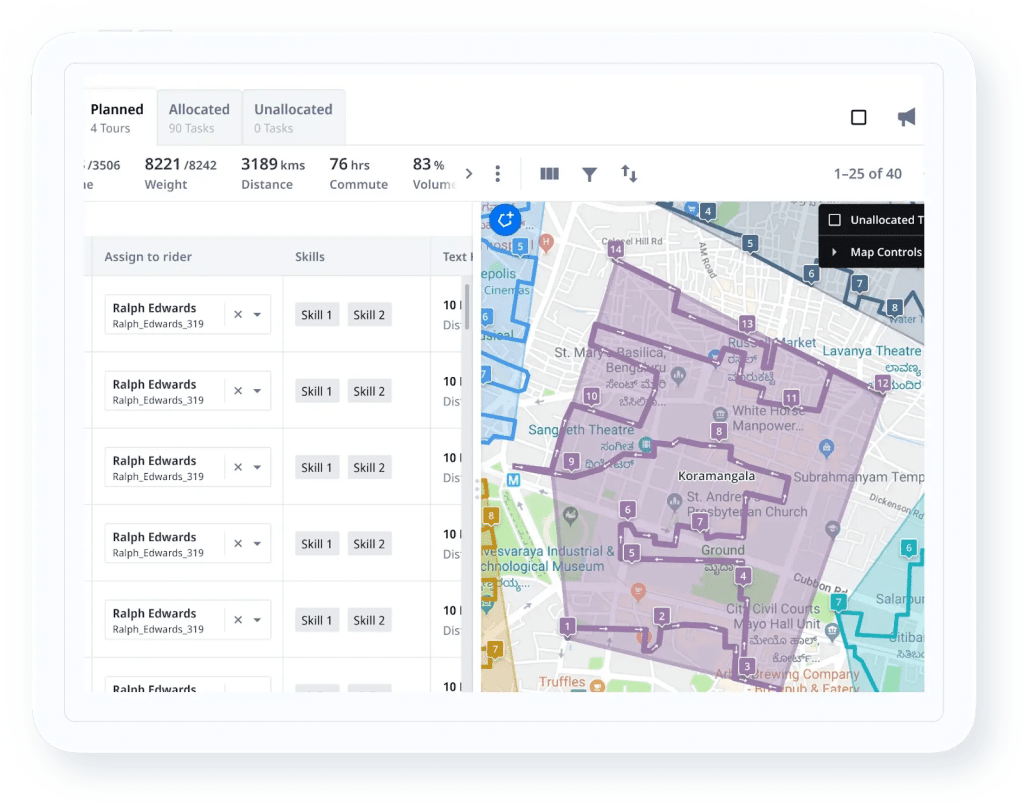
Routes are planned to reduce travel time and costs. Every stop, from the warehouse to the customer, is considered to make deliveries faster.
∙ Real-Time Tracking and Visibility

Businesses can see where products are at any moment. If a problem arises, it can be fixed before it affects delivery.
∙ Dynamic Order and Capacity Management

Orders are matched with available vehicles and staff. This prevents delays during busy periods and ensures resources are used efficiently.
∙ Predictive Analytics

Advanced tools forecast demand and identify potential issues. Retailers can adjust stock and delivery plans in advance.
∙ Automated Dispatch
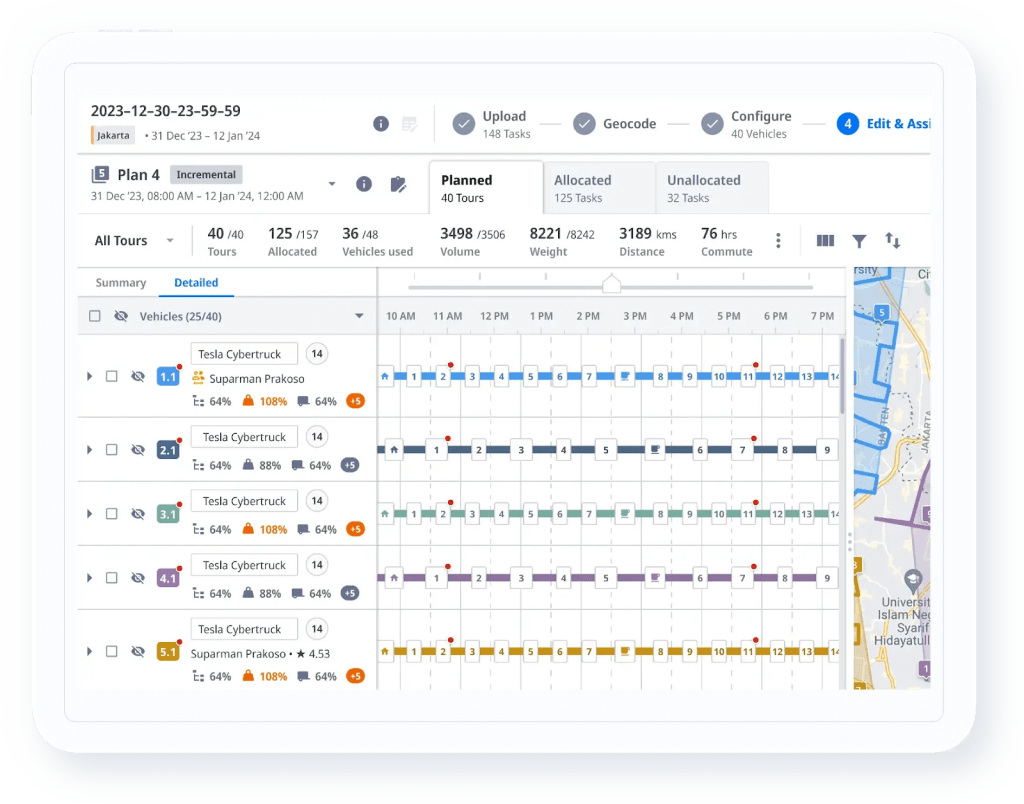
Orders are prioritized and assigned automatically. Deliveries stay on schedule even when demand is high.
These tools transform retail distribution into a system that is faster, more accurate, and reliable. For retailers handling large or complex shipments, capacity management, and automation are critical.
Learn more about these challenges and solutions in Locus’ Big and Bulky Retail Shipments e-book.
Boost Efficiency and Customer Satisfaction With Smarter Distribution
Retail distribution can be a strategic advantage when executed correctly. Businesses that align their distribution strategy with efficient operations, reliable partners, and modern tools can deliver products faster, reduce operational costs, and improve customer satisfaction.
Platforms like Locus help streamline these processes by providing real-time visibility, optimized routing, and automated dispatch, allowing retailers to respond quickly to demand changes, prevent delays, and maintain operational efficiency at scale. A well-structured system like this not only keeps operations smooth but also builds customer trust and loyalty.
Explore how your supply chain can operate smarter. Book a demo with Locus to see AI-driven distribution in action.
Frequently Asked Questions (FAQs)
1. What is the main goal of a retail distribution strategy?
The goal is to deliver the right products to the right place at the right time, optimizing costs, inventory, and customer satisfaction across all channels.
2. How can retailers handle sudden demand spikes?
By using scalable distribution partners, flexible inventory management, and dynamic routing, retailers can adjust quickly to sudden demand changes without disrupting operations.
3. Why is real-time visibility important in retail distribution?
It allows businesses to monitor shipments, identify potential issues early, and make proactive decisions, reducing delays and improving customer satisfaction.
4. How do modern technologies improve retail distribution?
Tools like automated dispatch, predictive analytics, and route optimization help retailers increase efficiency, reduce costs, and respond faster to demand fluctuations.
5. Can Locus help improve retail distribution?
Yes. Locus provides AI-driven visibility, route optimization, and automated dispatch, helping retailers streamline deliveries, reduce operational bottlenecks, and improve overall supply chain efficiency.

Retail & CPG
Retail Supply Chain Management: Definition & Strategies
Nov 3, 2025
Key Takeaways If your meetings are often about “How do we keep up with rising consumer expectations without crushing margins?” or “How do we deliver consistently across multiple channels without driving up costs of stockouts?”, you are probably facing challenges with your retail supply chain management. After all, your retail supply chain hinges on every […]
Read more
Dispatch Management
Cloud-based Dispatch Software: A Complete Guide [2025]
Nov 5, 2025
Explore cloud based dispatch software in 2025, definition, features, and benefits. Find out how Locus helps enterprises cut costs, scale, and boost delivery efficiency.
Read moreInsights Worth Your Time


SUBSCRIBE TO OUR NEWSLETTER
Stay up to date with the latest marketing, sales, and service tips and news
What Is Retail Distribution? Strategy & Best Practices