

Dispatch Management
What Is Dispatch Automation Software? Key Features & Benefits


Key Takeaways
- Automated dispatch systems replace manual processes with real-time job allocation, improving delivery speed, workload balance, and operational accuracy across complex logistics networks.
- Intelligent route optimization minimizes distance, fuel use, and idle time by adapting routes dynamically to live traffic, order volume, and delivery priorities.
- Automation boosts cost efficiency through smarter planning, reducing empty miles, redundant trips, and dispatcher workload while maintaining consistent delivery performance.
- Real-time tracking and analytics enhance visibility, allowing managers to resolve exceptions quickly, monitor KPIs, and continuously improve dispatch performance.
- Locus unifies automation, routing, and visibility tools into one platform that drives intelligent, scalable, and cost-efficient dispatch operations for enterprise logistics teams.
Delivery networks today move at a scale and speed that manual dispatching can’t match. Whether it’s retail, FMCG, or 3PL operations, logistics leaders now rely on dispatch automation software to keep routes optimized, orders on time, and fleets running efficiently.
Dispatch automation software uses AI and data-driven logic to assign jobs, schedule deliveries, and monitor performance in real time, minimizing errors and idle time. In 2025, as customer expectations tighten and operational costs rise, automation is becoming the foundation for smarter, more resilient logistics.
With Locus’ advanced dispatch automation capabilities, enterprises can connect every moving part of their operation, from driver allocation to last-mile visibility, ensuring agility and consistency across every delivery cycle.
What Are Automated Dispatch Systems?
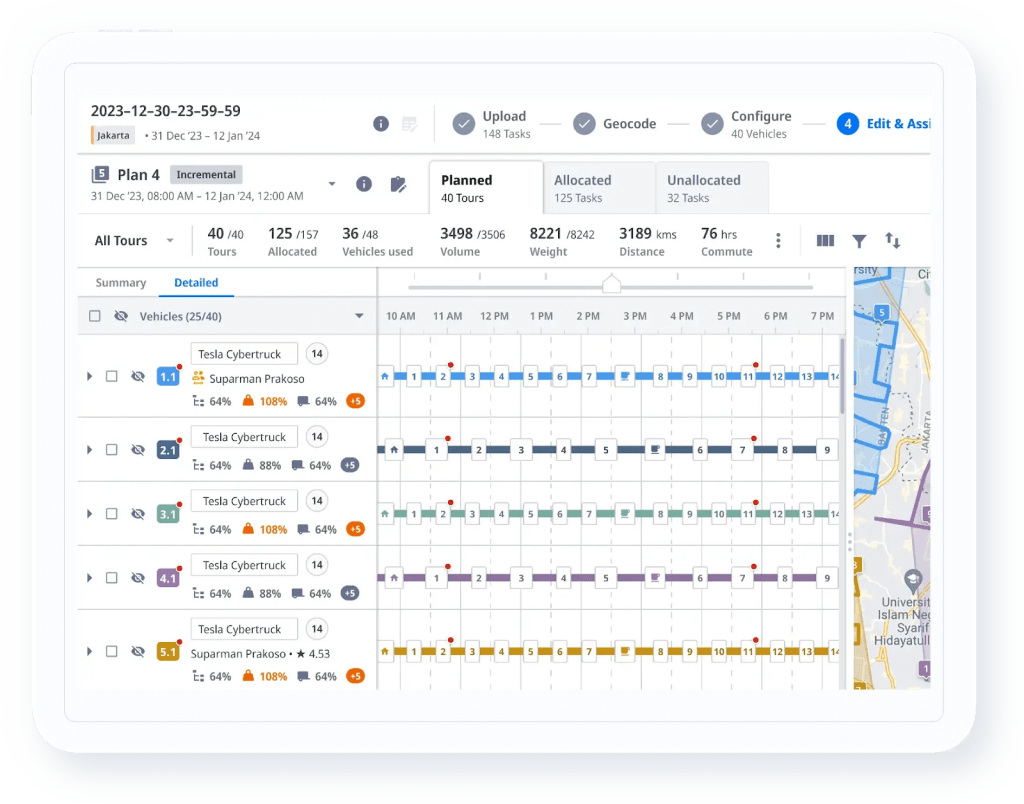
Automated dispatch systems are intelligent software platforms that manage the assignment of delivery jobs, drivers, and routes without manual intervention. Instead of relying on spreadsheets or dispatcher intuition, they use data-driven algorithms to determine which driver should handle which order, when, and how, all in real time.
These systems act as the operational core for logistics teams, synchronizing data across order management, fleet tracking, and route optimization tools. They evaluate multiple factors at once, delivery windows, vehicle capacity, driver proximity, traffic conditions, and service priorities, to create the most efficient dispatch plan possible.
Modern automated dispatch systems also integrate with ERP, TMS, and WMS solutions, allowing logistics teams to track and manage everything from order entry to proof of delivery within one interface. This level of automation helps organizations manage unpredictable workloads, reduce dispatcher fatigue, and maintain higher accuracy across every shift.
For example, large retailers often process thousands of delivery requests per day. An automated dispatch system can instantly allocate these to the most suitable vehicles while ensuring route efficiency and compliance with promised time slots.
By transforming dispatching from a manual, reactive task into a proactive, data-led process, automated dispatch systems help companies build resilience and scale their delivery operations effortlessly.
Why Is Dispatch Automation Software Important in 2025?
In 2025, dispatch automation software has become a necessity rather than an advantage. Logistics networks are larger, customer expectations are tighter, and fleet operations face constant cost and capacity pressures.
Manual dispatching simply can’t keep up with the complexity of modern, multi-region delivery demands.
Keeping Operations Agile and Responsive
- Automation brings consistency, speed, and flexibility to dispatch management across every shift.
- Dispatchers can instantly allocate drivers, reroute based on live traffic or weather, and handle exceptions proactively.
- Data-led insights help predict disruptions instead of reacting to them, minimizing delivery delays.
- AI-based allocation ensures the right vehicle is assigned to the right job at the right time.
- Real-time responsiveness helps fleets stay productive and maintain on-time delivery performance.
Controlling Costs and Improving Resource Utilization
- Automation reduces wasted fuel and driver hours through optimized route and load planning.
- Smart allocation minimizes empty miles and ensures each vehicle is used to its full capacity.
- Real-time tracking gives visibility into trip-level efficiency, time spent, and delivery costs.
- Managers can identify inefficiencies quickly and make data-backed adjustments to stay profitable.
Building Resilience with Predictive Intelligence
- Locus Dispatch Planning continuously analyzes changing delivery variables to reassign tasks instantly.
- Routes are re-optimized automatically when new orders, cancellations, or traffic updates occur.
- The Locus Control Tower provides live visibility, keeping managers in control across multiple regions.
- Predictive insights improve SLA compliance and strengthen customer trust through accurate, timely deliveries.
- Enterprises gain stability even under fluctuating demand and resource constraints.
Suggested read: What is Dispatch Management?
Key Features of Dispatch Automation Software
Dispatch automation software combines advanced planning logic, live visibility, and analytics to make every dispatch cycle faster and more accurate. These features together help logistics teams scale operations without increasing manual effort.
Smart Order Allocation
A core function of dispatch automation is intelligent order assignment. Instead of manually matching drivers to delivery tasks, the system analyzes variables such as distance, order priority, vehicle capacity, and driver location to assign jobs instantly. This eliminates human error and ensures balanced workloads across fleets.
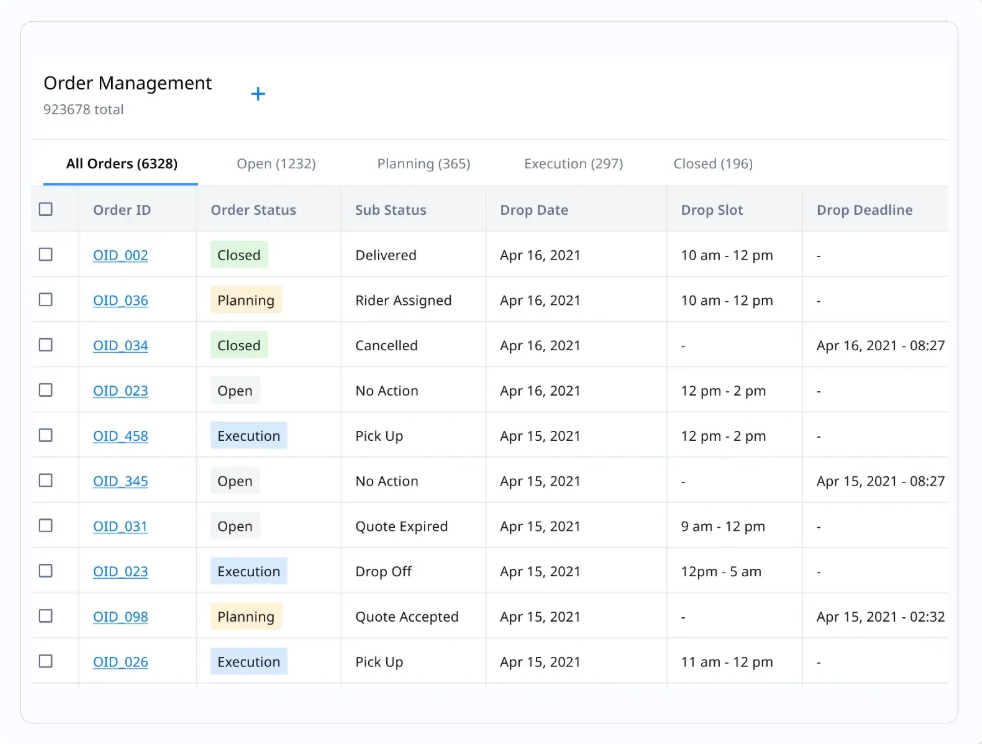
For instance, a retail chain with multiple urban delivery hubs can automatically allocate drivers based on proximity to customer clusters, ensuring shorter delivery times and better asset utilization.
How Locus does it:
Locus DispatchIQ uses AI-driven allocation models that weigh operational rules, delivery constraints, and real-time fleet conditions. It ensures every order is assigned to the best-fit driver, improving speed and reliability even during peak volumes.
Route Planning and Optimization
Effective dispatch management depends on intelligent routing. Route optimization tools analyze factors like traffic, delivery windows, and vehicle constraints to generate the most efficient paths. Automated route planning not only saves fuel but also reduces wear and tear, helping businesses handle more deliveries per shift.

For example, FMCG distributors can plan multi-stop routes for store replenishment, ensuring minimal detours and predictable arrival times.
How Locus does it:
Locus Route Optimization dynamically recalculates routes in real time when new orders or disruptions occur. The result, fewer miles traveled, improved on-time rates, and lower delivery costs.
Real-Time Tracking and Exception Handling
Visibility is essential for keeping deliveries on schedule. Automated tracking tools provide live updates on driver movement, location, and order status. They alert dispatchers about route deviations, delays, or vehicle issues before they impact the customer.

An e-commerce operator, for example, can use these insights to communicate accurate ETAs or reassign pending deliveries seamlessly.
How Locus does it:
The Locus Control Tower gives centralized visibility across all fleets and routes, with predictive alerts for exceptions. Managers can act immediately, reschedule, reroute, or reassign, without interrupting service flow.
Performance Analytics and Reporting
Dispatch software collects valuable operational data, from driver efficiency to route profitability. Analytics dashboards convert this data into actionable insights, helping logistics leaders evaluate KPIs, monitor SLAs, and identify areas for improvement.

For instance, a 3PL can analyze delivery density and success rates across cities to improve route design and cost efficiency.
How Locus does it:
Through the Locus Control Tower, managers gain access to detailed reports and predictive analytics that guide long-term planning, resource allocation, and cost control.
Industries That Benefit from Automated Dispatch Systems
Automated dispatch systems bring measurable efficiency gains across several sectors that depend on complex, time-sensitive delivery operations. Here’s how different industries benefit from adopting these solutions.
Retail and E-Commerce
- Streamlines same-day and next-day deliveries through faster driver allocation.
- Enables real-time coordination across stores, warehouses, and delivery fleets.
- Reduces missed deliveries by adjusting routes dynamically based on customer availability.
- Improves customer satisfaction with accurate ETAs and live order tracking.
FMCG and Consumer Packaged Goods (CPG)
- Automates replenishment runs between plants, warehouses, and retail outlets.
- Optimizes multi-stop routes for faster store restocking and lower fuel spend.
- Ensures time-sensitive goods reach outlets within shelf-life limits.
- Provides visibility into regional performance and delivery frequency.
Third-Party Logistics (3PL) and Distribution
- Handles diverse client requirements and fluctuating order volumes automatically.
- Consolidates dispatch planning across mixed fleets and multiple hubs.
- Improves vehicle utilization and turnaround time through centralized scheduling.
- Enhances coordination between shippers and carriers with real-time updates.
Manufacturing and Industrial Supply Chains
- Ensures on-time dispatch of raw materials and finished goods to plants and distributors.
- Reduces downtime by synchronizing production and delivery schedules.
- Minimizes manual coordination errors between suppliers and logistics teams.
- Tracks shipments across long-haul and last-mile legs for full operational visibility.
Courier, Express, and Parcel (CEP) Services
- Automates allocation for high-volume, time-critical parcel networks.
- Improves driver turnaround and reduces idle time between jobs.
- Uses real-time data to manage exceptions and maintain service-level commitments.
- Scales easily during demand surges such as seasonal peaks or promotional campaigns.
Advantages of Automated Dispatch Systems
Automated dispatch systems create efficiency across the entire logistics chain. They help operations teams work faster, lower delivery costs, and maintain consistent service quality — even during peak demand periods.
Faster Turnaround Time
Automation accelerates every stage of the dispatch cycle. Instead of waiting for manual task assignment or paper-based scheduling, jobs are distributed instantly based on real-time data.
Dynamic routing keeps vehicles moving efficiently, while dispatchers can focus on managing priorities instead of reacting to delays. The outcome is shorter lead times and smoother delivery flow during high-demand windows.
Cost Efficiency and Fuel Savings
Automated systems help companies control one of their largest expenses — transportation costs. By optimizing routes, minimizing empty miles, and improving vehicle utilization, they reduce both fuel and maintenance overhead.
Centralized scheduling also eliminates duplicate trips or idle runs. These cumulative savings make automation a sustainable lever for long-term profitability.
Higher Fleet Productivity
Automation maximizes how each vehicle and driver is used. Intelligent scheduling ensures evenly distributed workloads, and digital coordination reduces idle time between deliveries.
Fleet managers can monitor utilization metrics daily to make small adjustments that yield measurable gains in output and reliability.
Better Visibility and Exception Management
With automated tracking, logistics teams gain live visibility into every delivery. If a delay, traffic issue, or deviation occurs, alerts prompt immediate corrective action.
This constant feedback loop improves decision-making, keeps operations predictable, and minimizes missed deadlines.
Improved Customer Experience and SLA Compliance
Consistent, on-time deliveries directly impact customer satisfaction. Automated dispatch ensures accurate ETAs and proactive communication, giving customers confidence in service reliability. Businesses also maintain stronger SLA compliance, even when facing sudden order spikes or route disruptions.
How Locus Transforms Dispatch Automation
Locus brings automation, intelligence, and visibility together under one connected logistics orchestration platform. It replaces manual dispatching with data-driven decision-making that adapts in real time, whether a company operates a regional fleet or a multi-country network.
At its core, the Locus platform integrates AI-powered tools like DispatchIQ for automated order allocation, Route Optimization for efficient path planning, and the Control Tower for end-to-end visibility. Together, these solutions ensure every delivery is assigned, tracked, and completed with precision.
Unlike standalone systems that handle dispatch or tracking in isolation, Locus provides a unified control layer that connects planning, execution, and performance analysis. Dispatchers can view live fleet movement, reassign tasks instantly, and track delivery outcomes from one dashboard. This orchestration eliminates delays caused by siloed systems and manual interventions.
Enterprises using Locus typically see measurable operational gains — including up to 25–30% faster dispatch cycles, 20% lower logistics costs, and improved on-time delivery performance across service areas. These outcomes are achieved not through one feature, but through seamless integration of data, automation, and decision intelligence across the logistics lifecycle.
Locus enables businesses to move beyond automation toward strategic control — where every dispatch decision contributes to higher efficiency, customer satisfaction, and long-term scalability. Schedule a Demo
Frequently Asked Questions (FAQs)
1. What is the main purpose of dispatch automation software?
Dispatch automation software simplifies and accelerates the assignment of deliveries, routes, and drivers. It removes manual scheduling errors, improves resource use, and ensures every order reaches its destination efficiently through AI-based allocation and real-time optimization.
2. How does an automated dispatch system work?
An automated dispatch system integrates order, driver, and route data to make instant allocation decisions. It analyzes live conditions such as distance, traffic, and delivery time windows, then dispatches the most suitable driver automatically while continuously optimizing for efficiency.
3. Can small or mid-sized businesses use dispatch automation software?
Yes. Modern dispatch systems are scalable and can support businesses of any size. Smaller logistics teams use automation to reduce manual coordination, while larger enterprises benefit from centralized visibility and multi-location control.
4. What are the measurable benefits of using automated dispatch systems?
Key benefits include faster dispatch cycles, improved route efficiency, lower fuel costs, and higher on-time delivery rates. Companies also gain better control over fleet performance and can easily track SLA compliance through real-time dashboards.
5. How is dispatch automation different from traditional route planning?
Traditional route planning focuses only on optimizing paths. Dispatch automation goes further, it also automates job assignment, monitors live delivery progress, and manages exceptions, making the entire dispatch cycle intelligent and self-correcting.

Dispatch Management
Cloud-based Dispatch Software: A Complete Guide [2025]
Nov 5, 2025
Explore cloud based dispatch software in 2025, definition, features, and benefits. Find out how Locus helps enterprises cut costs, scale, and boost delivery efficiency.
Read more
Retail & CPG
Retail Fulfillment in 2025 – A Comprehensive Overview
Nov 7, 2025
Retail fulfillment in 2025 explained, challenges, strategies, and models. Learn how Locus simplifies fulfillment with AI-driven automation.
Read moreInsights Worth Your Time


SUBSCRIBE TO OUR NEWSLETTER
Stay up to date with the latest marketing, sales, and service tips and news
What Is Dispatch Automation Software? Key Features & Benefits