

Fleet Optimization
What is Truck Fleet Management? 5 Tips You Need to Know


Key Takeaways
- Truck fleet management integrates planning, tracking, maintenance, and analytics to improve delivery performance and cost efficiency.
- Automation and AI-driven dispatch systems help logistics teams adapt to fluctuating demand with speed and accuracy.
- Strong fleet management practices reduce fuel waste, prevent breakdowns, and ensure regulatory compliance.
- Integrated software connects fleets, orders, and drivers — creating full visibility across delivery operations.
- Locus’ AI-powered logistics platform empowers enterprises to manage owned and outsourced fleets seamlessly, optimize routes, and maintain predictable, high-performance operations.
Look a little ahead — the logistics industry is shifting faster than most fleets can keep up. By 2027, freight volumes are expected to surge by nearly a third, while fuel prices and emission rules grow more unpredictable. For many logistics teams, the gap between planning and execution is already widening. Every untracked vehicle, delayed delivery, or missed compliance check turns into higher costs and customer dissatisfaction.
Modern truck fleet management extends far beyond dispatch schedules or mileage reports. It connects every element of the operation — vehicles, routes, drivers, and maintenance — into a single intelligent system that helps companies respond swiftly to changing conditions.
Businesses that continue to rely on spreadsheets and siloed tools risk falling behind just when efficiency matters most.
Fleet leaders who modernize now can build resilient, data-driven operations that anticipate challenges instead of reacting to them. In this guide, you’ll learn what truck fleet management really entails, how it improves daily performance, and how Locus’ AI-powered logistics platform helps enterprises make that future-ready transformation today.
What is Truck Fleet Management?
Truck fleet management is the structured process of coordinating every aspect of fleet operations, from dispatch planning and driver scheduling to maintenance tracking and compliance reporting.

It helps logistics-heavy businesses deliver goods efficiently, control costs, and maintain visibility over every vehicle and route.
The Role of Data and Technology in Fleet Operations
Modern fleets thrive on data. Every truck, sensor, and delivery generates information that helps managers make faster, smarter operational choices. Fleet management systems consolidate this data into one command center, turning complex operations into measurable, actionable insights.
Key elements include:
- Telematics and GPS tracking: Provides real-time visibility into vehicle locations, speeds, and stops, enabling dynamic routing and quick response to delays.
- Centralized dashboards: Combine data from multiple fleets or geographies, allowing managers to track utilization, idle time, and performance trends at a glance.
- Predictive analytics: Forecasts maintenance needs, fuel usage, and route bottlenecks so teams can prevent costly breakdowns or missed SLAs.
- Data-driven decisions: Transforms raw metrics into operational strategy, helping teams balance costs, driver productivity, and delivery accuracy.
How Businesses Use Fleet Management in Daily Operations
For large-scale delivery networks, from retail distributors to 3PL providers, truck fleet management software is the nerve center of day-to-day logistics. It automates repetitive tasks, standardizes workflows, and provides transparency across the entire movement of goods.
Real-world applications:
- Route scheduling: Automatically plans delivery sequences based on time windows, capacity, and proximity to reduce travel distance.
- Live fleet monitoring: Offers up-to-the-minute updates on vehicle status, helping teams act quickly on route deviations or urgent orders.
- Performance tracking: Monitors KPIs like delivery time, fuel efficiency, and driver behavior to guide improvement initiatives.
- Exception handling: Alerts managers when issues arise, from late deliveries to maintenance needs, so they can reassign resources immediately.
The Shift Toward AI-Based Fleet Orchestration
Fleet management is moving from human-supervised scheduling to intelligent automation. AI-driven orchestration allows fleets to make autonomous decisions based on live data — not static plans. The result: fewer errors, better asset use, and higher delivery predictability.
AI-driven advantages:
- Smart dispatch allocation: AI assigns the most suitable vehicle and driver for each task based on distance, capacity, and traffic conditions.
- Dynamic routing: Automatically adjusts delivery routes in real time using live traffic and weather data.
- Proactive problem-solving: Machine learning models detect inefficiencies early, suggesting corrective actions before disruptions occur.
- Scalable decision-making: Enables logistics teams to manage hundreds of vehicles seamlessly across regions without manual oversight.
Read more: What Is Route Management?
What are the Benefits of Truck Fleet Management?
Strong truck fleet management reshapes how logistics organizations control cost, efficiency, and customer experience. With accurate data, predictive visibility, and automation, companies can turn routine fleet operations into measurable business impact.
Cost Efficiency Through Smarter Resource Use
Fleet management systems allow companies to maximize the use of every truck, route, and driver. Instead of reacting to inefficiencies, managers can plan precisely, cut waste, and stretch budgets further.
Key advantages include:
- Fuel cost reduction: Optimized routes and idling controls lower fuel consumption, directly improving margins.
- Reduced maintenance expenses: Predictive alerts and scheduled servicing prevent major repairs and vehicle downtime.
- Better asset utilization: Intelligent dispatching ensures trucks spend more time on the road and less in parking lots.
- Centralized expense tracking: Real-time data links every trip to its cost, simplifying budgeting and performance reviews.
Greater Visibility and Operational Control
Visibility is the foundation of reliability. Modern truck fleet management software provides end-to-end oversight, from departure to delivery, enabling logistics leaders to see, measure, and respond to events as they unfold.
Capabilities that strengthen control:
- Live vehicle tracking: Real-time GPS insights reduce blind spots across large territories.
- Proactive exception management: Instant alerts for route deviations, breakdowns, or delays allow for faster recovery.
- Accurate ETA predictions: Automated ETA updates keep customers and partners informed.
- Centralized reporting: One dashboard brings together fleet status, delivery progress, and driver performance.
Compliance and Driver Safety Improvements
Fleet compliance and safety are no longer optional; they are business-critical. Modern management platforms help companies meet legal, environmental, and safety standards consistently.
Compliance-driven benefits:
- Digital documentation: Automated record-keeping for licenses, inspections, and route permits ensures audit readiness.
- Driver monitoring: Telematics and in-cab sensors detect risky driving patterns for immediate corrective training.
- Regulatory adherence: Tools align fleet data with regional standards — from emission caps to road-use rules.
- Incident tracking: Instant documentation of on-road events supports insurance claims and safety reviews.
Sustainability and Lower Carbon Footprint
Optimized fleet operations play a direct role in meeting sustainability goals. Efficient routing, idle control, and predictive maintenance help reduce environmental impact while improving productivity.
Sustainability outcomes:
- Fewer empty miles: AI-based route allocation minimizes unproductive trips.
- Emission monitoring: Real-time data tracks fuel burn and CO₂ output for reporting.
- Eco-driving support: Behavior analytics promote smoother driving habits and reduced fuel waste.
- Greener planning: Insights help fleets transition strategically to hybrid or electric vehicles.
Together, these benefits position truck fleet management as both a cost-saving measure and a growth enabler. When paired with automation and predictive intelligence from platforms like Locus, logistics teams gain a clear, data-backed edge in a competitive market.
Primary Responsibilities of a Truck Fleet Manager
The role of a fleet manager goes far beyond scheduling deliveries. These professionals oversee every element of a logistics network — from vehicles and drivers to data, safety, and profitability.
Their work connects strategy with day-to-day execution, ensuring that fleets perform efficiently while staying compliant and cost-effective.
Planning and Scheduling Deliveries
Fleet managers design efficient delivery schedules that balance customer demands, resource availability, and operational constraints.
Key functions include:
- Route assignment: Allocating vehicles and drivers based on load type, distance, and delivery windows.
- Capacity planning: Analyzing order volumes and vehicle availability to prevent overuse or underutilization.
- Demand forecasting: Using historical and seasonal data to anticipate fleet requirements in advance.
- Shift coordination: Aligning driver schedules with regional service times and rest regulations.
Monitoring Fleet Performance and Costs
Tracking performance data ensures that every mile and minute contribute to business goals. Fleet managers use performance metrics to identify patterns, control expenses, and strengthen accountability.
Performance-driven tasks:
- Fuel tracking: Monitoring consumption trends to highlight inefficiencies.
- Driver behavior analysis: Reviewing telematics data for acceleration, braking, or idle time patterns.
- Cost reporting: Summarizing trip-level expenses for financial visibility.
- Benchmarking: Comparing actual performance with planned KPIs for operational improvement.
Maintaining Vehicle Health and Compliance
Keeping trucks in optimal condition safeguards reliability and compliance. A single missed inspection or breakdown can disrupt schedules and inflate repair costs.
Core responsibilities:
- Preventive maintenance: Scheduling regular servicing to extend vehicle lifespan.
- Digital maintenance logs: Recording inspections and repairs for easy tracking and audit readiness.
- Compliance checks: Ensuring all vehicles meet regional safety, emission, and licensing standards.
- Downtime management: Using predictive tools to plan maintenance around delivery peaks.
Coordinating Drivers and Field Teams
Drivers are at the center of fleet success. Fleet managers work closely with them to balance efficiency with safety and morale.
Key coordination areas:
- Communication: Keeping drivers updated through connected mobile apps and dashboards.
- Training programs: Using performance data to tailor safety or fuel-efficiency training.
- Incident management: Handling delays, route diversions, or emergencies with immediate action plans.
- Recognition systems: Encouraging accountability and performance through feedback loops.
Using Fleet Management Software for Decision Support
Modern fleet managers rely on digital platforms for real-time insights and strategic decision-making.
Technology-enabled advantages:
- Centralized visibility: One dashboard shows vehicle status, route progress, and cost metrics.
- Predictive insights: AI-driven analytics forecast issues before they affect deliveries.
- Cross-team collaboration: Integrated systems connect logistics, finance, and customer service teams.
- Automation: Routine tasks such as dispatch, invoicing, and compliance reporting run autonomously.
Example: FMCG distributors managing thousands of deliveries daily can use platforms like Locus Dispatch Management Software and Locus Control Tower to balance on-ground execution with cost visibility and SLA accuracy.
How to Improve Fleet Truck Management: 5 Tips You Need to Know
Even the most experienced logistics teams face constant change, from fluctuating demand and new delivery zones to unpredictable fuel and labor costs.
To stay efficient, they must blend automation, insight, and agility that keeps every part of the fleet moving smoothly, no matter how complex the network grows.
1. Automate Route Planning and Dispatch
Manual route assignment limits scalability and accuracy. Automation ensures each delivery is handled by the right vehicle and driver, at the right time.
Action points:
- AI-based routing: Algorithms analyze order data, capacity, and real-time traffic to design optimal routes automatically.
- Dynamic dispatching: Tasks are reassigned instantly when orders change or delays occur.
- Balanced workloads: Intelligent systems prevent driver fatigue and asset overuse.
- Locus advantage: DispatchIQ automates order allocation, helping enterprises reduce route planning time by up to 75%.
2. Monitor Fleet Health and Driver Behavior
A healthy fleet and well-trained drivers determine overall reliability. Continuous monitoring keeps vehicles safe and drivers consistent in performance.
Action points:
- Telematics data: Real-time diagnostics detect mechanical issues before they become costly breakdowns.
- Driver scorecards: Behavioral data helps identify training needs and promote safer habits.
- Maintenance alerts: Automated reminders ensure timely servicing.
- Locus advantage: The Control Tower module gives unified visibility across vehicles and field teams for proactive intervention.
3. Analyze Fleet Data to Drive Decisions
Data is only valuable when it informs action. Centralized analytics reveal patterns that shape strategy, budgets, and service quality.
Action points:
- KPI dashboards: Track fuel use, turnaround time, and on-time deliveries from one screen.
- Performance trends: Identify high-performing routes or recurring bottlenecks.
- Profitability mapping: Connect operational data with cost metrics to measure true ROI.
- Locus advantage: AI analytics in RouteIQ highlight route efficiency and capacity gaps automatically.
4. Integrate Fleet and Order Management Systems
Disconnected systems slow decision-making. Integration ensures information flows smoothly between logistics, sales, and customer service teams.
Action points:
- ERP/WMS integration: Syncs order data, delivery status, and fleet availability.
- Unified view: Eliminates duplicate entries and delays in communication.
- Cross-functional planning: Helps logistics teams align with demand forecasts and inventory goals.
- Locus advantage: Locus connects seamlessly with leading ERP and order management systems, enabling real-time coordination across functions.
Suggested read: Cross-fleet utilization key to business growth
5. Invest in Scalable Fleet Management Software
Growth requires flexibility. Scalable software supports expanding geographies, varied fleet sizes, and complex logistics models without additional manual work.
Action points:
- Cloud-based access: Manage fleets anytime, anywhere through secure dashboards.
- Custom workflows: Configure approvals, dispatch logic, and reporting by business need.
- Real-time scalability: Add routes, drivers, or fleets instantly as demand rises.
- Locus advantage: Locus’ end-to-end logistics platform scales with your business, supporting owned and outsourced fleets under one intelligent layer.
Take Control of Your Fleet Management With Locus
As delivery networks grow and costs rise, logistics teams need more than visibility — they need control. Locus provides that control through intelligent automation that unifies planning, dispatch, tracking, and analytics under one scalable platform.
Its AI-powered decision engine helps enterprises move beyond manual processes to run data-driven, self-learning fleet operations across every region and vehicle type.
AI-Driven Route Planning With Dispatch Planning Software
Manual route planning can’t keep up with fluctuating orders or regional delivery constraints. Locus Dispatch Planning software uses machine learning to generate the most efficient route combinations for every trip, every time.

Capabilities include:
- Smart order allocation: Automatically matches orders with the right driver and vehicle based on time windows, capacity, and proximity.
- Real-time adjustments: Recalculates routes instantly when new orders or delays occur.
- Higher utilization: Maximizes truck productivity while reducing idle time and empty miles.
- Measurable outcomes: Enterprises using DispatchIQ report shorter delivery times and up to 30% lower logistics costs.
Centralized Visibility With Locus Control Tower
Managing a fleet across multiple cities requires constant awareness of what’s happening on the road. Locus Control Tower gives managers a live command view of vehicles, drivers, and exceptions, all in one dashboard.
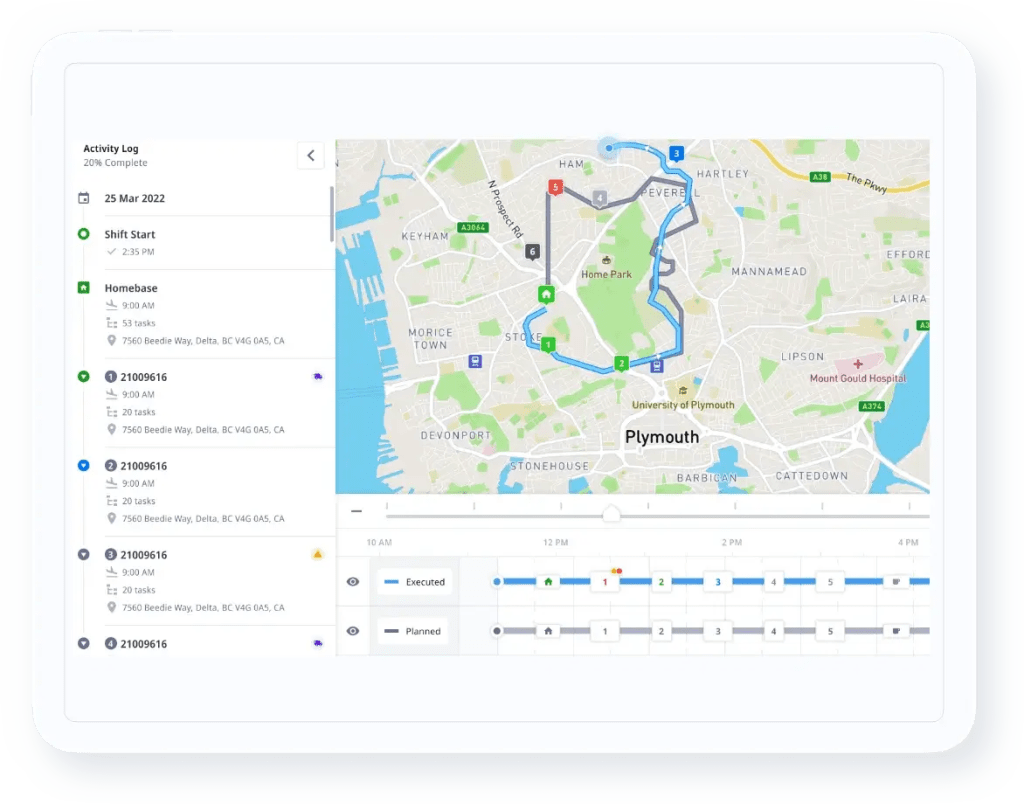
Benefits for logistics teams:
- Real-time fleet tracking: Monitor progress and intervene quickly when delays arise.
- Exception management: AI flags missed ETAs or route deviations instantly.
- Predictive alerts: Anticipates possible risks like weather disruptions or vehicle breakdowns.
- Better collaboration: Enables logistics, finance, and customer service teams to act on the same data in real time.
Continuous Optimization With Locus
Performance doesn’t stop at delivery. Locus’ route optimization helps businesses evaluate completed trips, analyze KPIs, and uncover new ways to improve utilization.
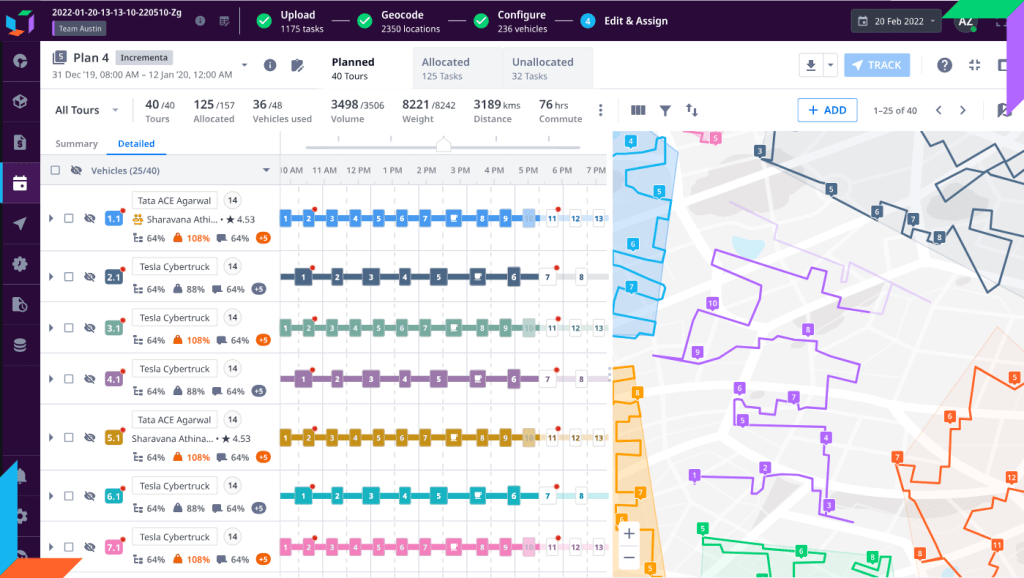
Data-driven improvements:
- Trip analytics: Visualizes route performance by cost, mileage, and turnaround time.
- Historical insights: Compares planned vs. actual data to refine future delivery strategies.
- Capacity optimization: Identifies underused vehicles and balances workloads.
- Custom reporting: Creates exportable reports for leadership and financial teams.
Why Enterprises Choose Locus
Locus transforms fleet operations from reactive to predictive. By integrating AI, real-time visibility, and automation into one platform, it empowers logistics leaders to reduce costs, strengthen compliance, and deliver consistently. Whether managing a regional fleet or a global distribution network, Locus enables faster, smarter, and more sustainable logistics.
CTA: Book a Demo with Locus to see how your team can take full control of its fleet operations.
Frequently Asked Questions (FAQs)
1. What does truck fleet management include?
Truck fleet management covers route planning, vehicle maintenance, driver scheduling, and compliance tracking. It helps logistics teams monitor daily operations, reduce downtime, and improve delivery accuracy through centralized dashboards and real-time data visibility.
2. How can fleet management software improve efficiency?
Fleet management software automates key processes like dispatching, route optimization, and vehicle tracking. By analyzing data in real time, it helps companies lower fuel costs, minimize empty miles, and enhance delivery reliability across multiple geographies.
3. What are the key metrics to track in truck fleet management?
Important KPIs include on-time delivery rate, fuel efficiency, fleet utilization, idle time, and maintenance frequency. Tracking these metrics helps identify operational gaps and measure how effectively fleets are performing against business goals.
4. Why is AI important in modern fleet management?
AI helps fleets make smarter, faster decisions. It predicts demand patterns, recommends optimal routes, and identifies potential risks before they disrupt operations — allowing logistics teams to improve accuracy and scalability while reducing manual effort.
5. How does Locus help improve truck fleet management?
Locus uses AI-powered automation to handle everything from route planning and dispatch to real-time visibility and analytics. Its solutions give enterprises complete control over delivery operations, enabling faster decisions, lower costs, and better utilization across owned and outsourced fleets.

Route Optimization
Best Truck Routing Software Providers in 2025
Nov 18, 2025
Compare the 10 top truck routing software providers in 2025 with detailed features, pricing, and ROI analysis to find the best solution for your fleet size and operational needs.
Read more
General
How Top CPG Companies Simplify Distribution and Cut Costs in 2025
Nov 20, 2025
Discover 2025’s best Direct Store Delivery examples and see how AI-based delivery systems like Locus simplify DSD routing, scheduling, and fulfillment.
Read moreInsights Worth Your Time


SUBSCRIBE TO OUR NEWSLETTER
Stay up to date with the latest marketing, sales, and service tips and news
What is Truck Fleet Management? 5 Tips You Need to Know