

Sustainability
Sustainable Logistics ROI: Navigating the Ambiguity

Key Takeaways
- Global urban logistics delivery demand is projected to increase 78% by 2030, leading to 36% more delivery vehicles and increased emissions in major cities.
- Collaborative efforts between public and private sectors could reduce delivery emissions and congestion by 30% through sustainable distribution channels and optimization.
- 88% of consumers demonstrate loyalty to environmentally responsible businesses, making sustainability initiatives crucial for long-term customer retention and brand value.
- Locus’s Dispatch Management Platform helps companies optimize delivery routes and reduce ecological impact while maintaining operational efficiency and cost-effectiveness.
While the impact of climate change has been slow and insidious, it has also been tremendous. Human activities, mainly through the emissions of greenhouse gasses, have unequivocally caused global warming, with global surface temperature reaching 1.1°C above 1850–1900 in 2011–2020. The melting of glacial ice-caps, rise in sea-levels, and extreme weather conditions, are only some of the serious consequences for the world at large and, by extension, global supply chains. The more frequent and severe these disruptions are, the more they will interrupt production and hurt corporate revenues.
Mere lip service won’t do; the need of the hour is bold, urgent, and consistent action towards reducing the impact of climate change. This involves not only mitigating the damage already done but also implementing adaptation measures swiftly and effectively. It is crucial that we act with a sense of urgency in the coming decade to make a tangible difference.
The Road to Sustainable Logistics
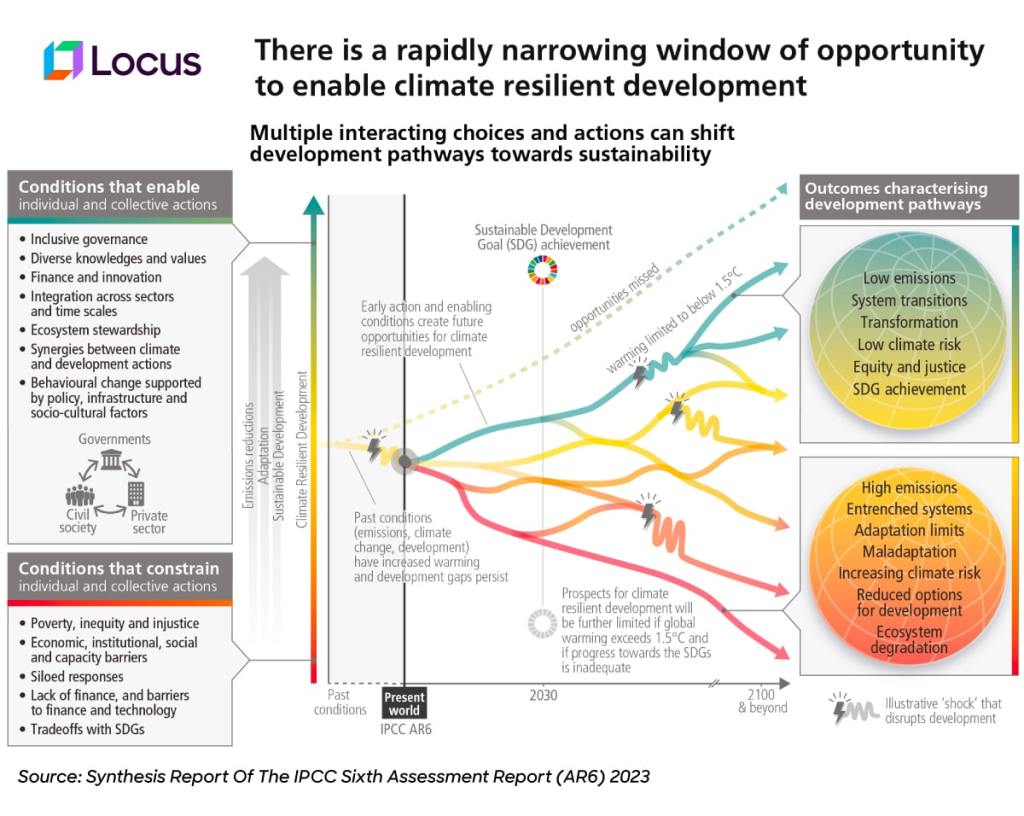
The window of opportunity to enable climate-resilient development may be small, but it is very much there. As the global market for green technology and sustainability grows—417.35 billion U.S. dollars by 2030—it becomes crucial to focus on achieving logistics sustainability in our urban areas. By 2030, the demand for urban logistics delivery is projected to rise by 78%, leading to a 36% increase in delivery vehicles in the world’s top 100 cities. Unfortunately, this increase will also result in a rise in related emissions and an additional 11 minutes to each passenger’s commute.
To address this issue, adopting sustainable distribution channels that not only enable economic efficiency but also minimize costs and reduce ecological impact while meeting consumer expectations becomes vital. By creating an ‘ecosystem scenario’ where public and private players work together effectively, delivery emissions and congestion can be reduced by 30% until 2030. This will require collective effort towards developing and implementing sustainable solutions that prioritize both economic and environmental factors.
The ROI Dilemma in Sustainable Logistics: Balancing Short-Term Gains with Long-Term Value
With consistent action come consistent results. But how do you measure these results? Measuring sustainability’s return on investment (ROI) in logistics delivery can be as difficult as nailing jelly to a tree. Some of the common challenges faced by businesses include:
- No set guidelines or standardized set of metrics: At the moment, there are no set guidelines or standardized metrics for measuring the ROI of sustainability in logistics delivery. This makes comparing performance with others and identifying best practices quite a challenge.
- Challenges in quantifying benefits: Sustainable practices have clear financial benefits, such as reduced fuel and maintenance costs, but it can be difficult to quantify social and environmental benefits of sustainability such as improved worker health and safety, increased community engagement, reduced greenhouse gas emissions, and biodiversity conservation.
- Prioritizing immediate gains: Sustainable practices are often geared towards long-term benefits that extend beyond immediate financial returns, which can be difficult to justify to investors and other stakeholders. They may require upfront investments but offer significant benefits in the long run, including reduced operating costs, improved environmental performance and social responsibility.
- Complexity of the logistics delivery network: Logistics delivery networks can be complex, with many different stakeholders involved, including carriers, drivers, customers, and regulators. This can make it challenging to track and measure the impact of sustainability initiatives on the entire network.
Why Businesses Must Champion Sustainable Logistics
Interestingly, customers are increasingly favoring companies with sustainable practices. Companies that put sustainability first are more likely to win customer loyalty, with a staggering 88% of consumers remaining loyal to socially and environmentally responsible businesses. Sustainable logistics delivery models can boost a company’s efficiency, bottom line, and brand image. This presents a strong incentive for business and supply chain executives to promote sustainable logistics strategies and raise awareness about their benefits.
Download the eBook to learn how green logistics can turn your business into profitability?
It becomes clear then that businesses need to work collaboratively with stakeholders to develop a set of standardized metrics and guidelines for measuring the ROI of sustainability in logistics delivery to overcome these challenges. They may also need to invest in new technologies, such as telematics systems or environmental monitoring tools, to collect the necessary data to measure the impact of sustainability initiatives on their business and the environment. Some of the ways in which the ROI challenge in sustainability can be addressed include:
- Using multiple metrics: To address the challenges of measuring ROI in sustainability initiatives, it is essential to use numerous metrics that capture both short-term and long-term impact. For example, metrics such as carbon emissions, fuel consumption, delivery times, and customer satisfaction can be used to measure the success of sustainability initiatives. By using multiple metrics, businesses can get a more comprehensive view of the ROI of their sustainability initiatives.
- Using clear and concise messaging: Clear and concise messaging is critical for effectively communicating the value of sustainable logistics initiatives to stakeholders. Messaging should be focused on the benefits of sustainability initiatives, such as reduced costs, improved efficiency, and enhanced brand reputation, while also addressing any potential concerns or challenges. The messaging should be tailored to the specific audience, whether it be employees, customers, or investors.
- Strategies such as Data Visualization: A powerful tool for communicating the impact of sustainability initiatives in a clear and compelling way is data visualization. Charts, graphs, and infographics, can help businesses effectively convey the impact of their sustainability initiatives to stakeholders. Using data visualization can reveal insights that would otherwise be difficult to identify.
- Employing digital tools to disseminate information: Digital channels, such as social media, email, and websites, can be used to share information about sustainability initiatives to a wide audience. Digital channels can also be used to engage with stakeholders, gather feedback, and showcase the impact of sustainability initiatives. By using digital media, businesses can reach a broader audience and demonstrate their commitment to sustainability in a transparent and accessible way.
Efficiency, profitability, and sustainability are the three pillars that uphold the modern business landscape. In today’s world, a green supply chain is a must-have for any business looking to secure long-term success. Fortunately, logistics technologies offer a compelling solution to help businesses meet this challenge head-on.
By streamlining delivery operations and encouraging sustainable practices, logistics technologies can help companies reduce their carbon footprint, save on greenhouse gas emissions, and unlock permanent business value. By adopting sustainable logistics solutions, such as the Locus Dispatch Management Platform, businesses can optimize their delivery routes, minimize the number of miles driven, and significantly reduce their ecological impact.
Frequently Asked Questions (FAQs)
1. What is sustainable logistics?
Sustainable logistics means running supply chains in a way that reduces carbon emissions, fuel use, and waste, while keeping deliveries efficient and reliable. It focuses on greener transport, eco-friendly packaging, and smarter delivery planning.
2. Why is ROI difficult to measure in sustainable logistics?
ROI is hard to measure because the benefits of sustainable logistics often show up over time. Lower emissions, customer trust, and long-term savings don’t always appear in short-term financial reports, making results seem unclear.
3. What metrics can businesses use to evaluate ROI in sustainable logistics?
Key metrics include reduced fuel costs, fewer empty miles, carbon footprint reduction, on-time delivery rates, and overall cost-to-serve. Tracking both cost savings and sustainability impact gives a complete ROI picture.
4. How does sustainable logistics benefit businesses?
Sustainable logistics helps cut operating costs, improves delivery efficiency, and builds a strong brand image. Customers increasingly prefer companies that care about the environment, which leads to better loyalty and competitive advantage.
5. What technologies enable sustainable logistics?
Technologies such as route optimization tools, fleet tracking systems, electric or hybrid vehicles, and digital visibility platforms help companies make logistics more sustainable while reducing costs.

Case Study
This Mexico-Based E-commerce Business Reduced 66% Delivery Costs With Locus

May 3, 2023
Jüsto a Mexico based e-commerce business reduced its delivery costs by 66% and rapidly scale its operations with the Locus’ Route Planning module.
Read more
Retail & CPG
Can Retailers Reinvent the Last Mile? The Trillion-Dollar Question

May 9, 2023
Key Takeaways US retail e-commerce is on a meteoric rise, thanks to the high levels of convenience that comes with the experience. Statista forecasts that its revenue will hit a whopping $1 trillion in 2023 and skyrocket to $1.5 trillion by 2027. That’s an enormous chunk of change, and it underscores the importance of optimizing […]
Read moreInsights Worth Your Time


SUBSCRIBE TO OUR NEWSLETTER
Stay up to date with the latest marketing, sales, and service tips and news
Sustainable Logistics ROI: Navigating the Ambiguity