

General
Why to Consider Delivery Management System for E-Commerce Business

Key Takeaways
- Delivery management impacts speed, cost, and customer trust, making it a core part of successful e-commerce operations.
- Coordinated workflows across order processing, routing, and tracking reduce delays and operational inefficiencies.
- Managing multiple delivery types efficiently requires automation and unified visibility across every delivery model.
- Common challenges like rising costs, poor visibility, and fluctuating demand need connected systems to maintain consistency.
- Locus simplifies e-commerce delivery management with AI-driven routing, real-time visibility, and analytics that help teams deliver faster and scale smarter.
Running e-commerce deliveries without a central system is like managing an airport without air traffic control — every order is moving, but no one can see the full picture. Packages come in from multiple channels, each with its own promised delivery window and route constraints. Without coordination, trucks leave underloaded, drivers miss time-sensitive delivery windows, and customer updates fall through the cracks. The result is slower dispatches, mounting fuel costs, and growing customer dissatisfaction.
Many e-commerce businesses hit this wall as order volumes rise. Manual planning and scattered tools make it difficult to reassign drivers, reroute shipments, or alert customers when something changes. Operations teams end up reacting to problems that a connected system could have prevented.
A delivery management system changes that. It brings order processing, routing, tracking, and proof of delivery into one controlled flow, so logistics teams can make quick, data-backed decisions instead of firefighting every delay.
This blog unpacks why delivery management is central to e-commerce growth, what steps shape a successful delivery process, the most common roadblocks, and how Locus helps brands bring precision and predictability back into last-mile operations.
Why E-Commerce Delivery Management Matters
In e-commerce, delivery is the brand experience customers actually feel. A single missed apartment access code, a driver arriving outside a paid slot, or a stale tracking link can undo weeks of marketing in minutes. Expectations have shifted from “shipment sent” to precise ETAs, reschedulable windows, and proactive alerts when things change.
What “management” really controls
- Promise accuracy: Match website promises real capacity and cut-off times, so a “Next-Day by 8 PM” badge only shows where you can actually hit that window.
- Capacity and slot integrity: Don’t oversell 6–8 PM slots; cap them by vehicle capacity, service time, and local traffic patterns.
- Exception handling: Detect issues early (hub miss, address quality, weather, traffic spikes) and trigger reroutes or customer outreach before the SLA is at risk.
- First-attempt success: Reduce “customer not available,” building access problems, and COD/payment friction with pre-arrival workflows and address validation.
- Network mix: Decide, stop by stop, whether to keep a parcel in your fleet or hand it to a regional carrier based on cost, SLA risk, and historical performance.
The cost of running manual or scattered
Manual planning creates specific, repeatable failures:
- Missed cut-offs: Orders accepted after the warehouse’s true pick/pack deadline end up rolling a day, killing NPS for paid-expedited tiers.
- Underloaded or overstuffed routes: One district runs half-empty while another spills past driver hours, spiking cost per stop.
- Late or wrong-door deliveries: Apartments and gated communities cause reattempts; every reattempt adds fuel, driver time, and customer frustration.
- Silent delays: If a line-haul missed the morning injection, stops still show “On the way” while drivers haven’t even received parcels.
- Slot breaches: Peak evenings fill up; without controls, you sell more 7–9 PM slots than your city can serve, resulting in refunds and support volume.
What changes with a connected system
A delivery management platform ties order capture, dispatch, routing, live tracking, and proof of delivery into a single flow, so teams can act in minutes, not hours:
- Live risk signals: If a route slips 25 minutes behind, auto-shrink the remaining service windows and inform customers with an updated ETA—before they call support.
- Dynamic rebalancing: Pull two heavy stops off an overrun driver and assign them to a nearby vehicle that just cleared a micro-cluster.
- Granular geos and service times: Plan for building types (elevator vs. walk-up), dock rules, or required installation time so ETAs reflect reality.
- Carrier governance: Compare carriers by corridor, product type, and time band; steer parcels away from lanes where on-time % has dipped this week.
- Proof and audit: Photo, PIN, and e-signature close the loop; exceptions flow back to CS and refunds tools automatically.
Outcomes you can track
- On-time delivery rate (OTD): Not just daily, but by slot and by city.
- First-attempt delivery rate: Drives both cost and satisfaction; aim to move this more than headline OTD.
- Cost per delivery / per successful stop: Includes reattempt overhead and refunds from slot misses.
- Promise accuracy: % of orders delivered within the website’s stated window.
- Support deflection: Fewer “Where is my order?” contacts when ETAs and exceptions are pushed proactively.
How Locus helps (in practice)
- Promise control at checkout: Expose only the slots you can actually serve based on live capacity, cut-offs, and historical traffic by micro-zone.
- Adaptive routing: Rebuild parts of a route mid-shift as traffic or cancellations hit, without blowing up driver hours.
- Predictive exceptions: Flag likely failures (bad address, long service times, weather corridors) at dispatch time, not at 7 PM.
- Customer comms that prevent reattempts: Auto-messages with building access instructions, payment readiness for COD, and live driver ETA links.
- Tight proof of delivery: Photo/PIN/e-sign with geotag, flowing straight into returns and CS systems for clean investigations.
General Steps in the E-Commerce Delivery Management Process

Efficient e-commerce delivery depends on coordinating every stage—order capture, fulfilment, routing, and delivery. Below, we break down these steps and how they shape operational speed and customer experience.
1. Order Placement and Processing
The order is received, verified, and logged in the system. Customer details, delivery address, and product data are passed automatically to the fulfilment team.
- Automation reduces data entry errors and speeds up confirmation.
- Integrated systems send instant updates to customers once the order is accepted.
2. Order Picking, Packing, and Handover
Products are picked from inventory and packed for shipping. The right warehouse or store is selected based on stock and proximity to the delivery location.
- Smart allocation shortens travel distance and cuts cost.
- Quality checks at this stage prevent errors downstream.
3. Route Planning and Dispatch
This stage defines delivery efficiency. Using order volume, delivery windows, and traffic data, routes are planned and drivers assigned automatically.
- AI-driven routing improves time and fuel efficiency.
- Dynamic dispatching balances workloads and reduces idle capacity.
4. Tracking and Exception Management
Once the parcel leaves the facility, real-time visibility becomes essential. Customers and operations teams can track progress and get alerts.
- Exceptions like failed attempts or weather delays are flagged instantly.
- Faster responses prevent missed SLAs and extra delivery costs.
5. Proof of Delivery and Feedback
Drivers record proof of delivery through digital signatures or photo confirmation. Customer feedback is collected to refine future operations.
- Delivery data helps measure performance and identify improvement areas.
Integrated delivery management connects every stage into one system, allowing teams to monitor performance in real time and adjust routes or resources instantly.
Pro Tip:
Track driver productivity and route deviations weekly to identify patterns. Use those insights to refine dispatch logic and cut idle hours.
E-Commerce Delivery Types
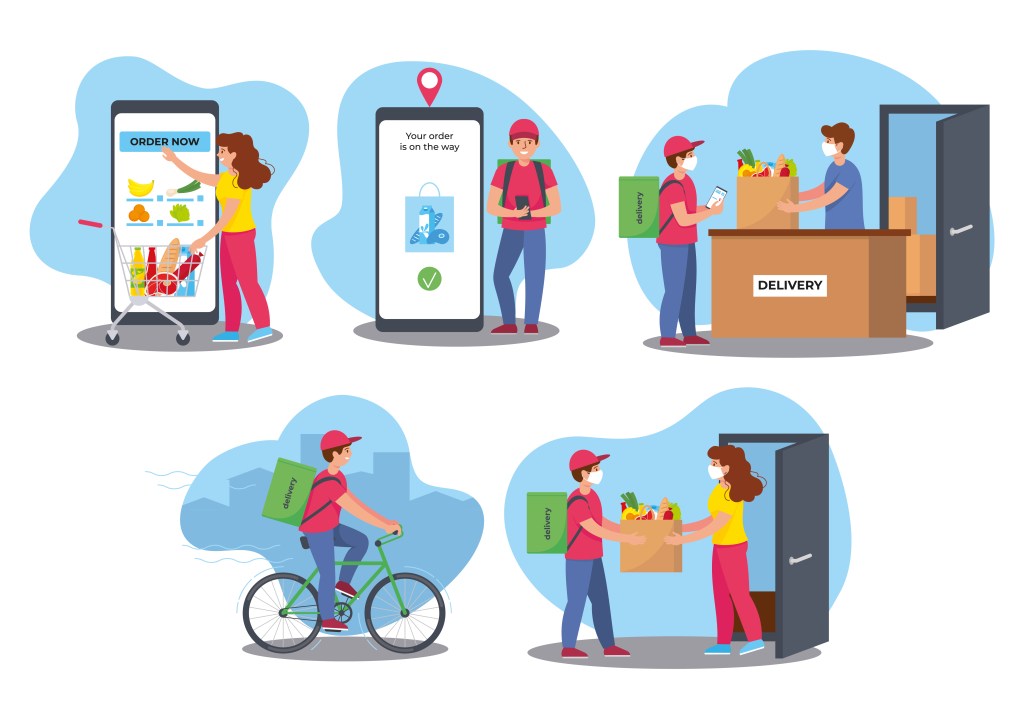
Retailers manage different delivery types to meet varied customer needs. Each model affects how orders are planned, routed, and fulfilled. The right system helps balance speed, cost, and customer satisfaction without adding complexity.
1. Standard Delivery
The most common and economical method for non-urgent shipments. Customers choose it when cost matters more than speed.
- Uses pre-set delivery windows and optimised route clusters.
- Works best for steady order volumes and wide service areas.
2. Express or Same-Day Delivery
Designed for time-sensitive orders, especially in urban zones.
- Requires real-time inventory visibility and quick order batching.
- Depends on driver availability and accurate route sequencing.
3. Scheduled Delivery
Used for bulky or high-value items where timing is critical.
- Customers select a preferred slot, and routes are built around it.
- Reduces failed deliveries and reattempt costs.
4. Click-and-Collect / Curbside Pickup
Common in omnichannel retail, where customers collect online orders from nearby stores or hubs.
- Lowers last-mile delivery costs and consolidates store traffic.
- Works well for groceries, fashion, and electronics.
Read more: All You Need to Know About Click & Connect
Each type demands a different level of control and coordination. Managing them separately often leads to delays and higher cost. A unified e-commerce delivery management platform brings these models together under one system, making it easier to plan routes, allocate resources, and deliver on time.
Challenges in E-Commerce Delivery Management
The biggest challenges in e-commerce delivery stem from fragmented systems, unpredictable demand, and rising last-mile costs that disrupt fulfilment efficiency. Each of these issues affects how quickly and accurately orders move through the supply chain.
Let’s look at them in detail below.
1. Operational Pressures
Rising fuel prices and carrier surcharges push delivery costs higher. In addition to it, poor route planning and empty miles waste fuel and time. These inefficiencies slow fulfilment and raise expenses per delivery.
Solution? Automate route planning and order clustering to lower mileage and boost delivery density.
2. Visibility Gaps
Disconnected tools and delayed tracking make it hard to monitor orders in real time. Teams often spot delays only after they break SLAs or hurt customer satisfaction.
Solution? Use an integrated dashboard that connects carriers, drivers, and customers for live status tracking.
Q: How can better visibility reduce last-mile costs?
A: Real-time tracking helps reroute drivers and prevent failed deliveries, cutting fuel use and reattempts.
3. Returns and Reverse Logistics
High return volumes in fashion and electronics strain warehouse space and cash flow. Using separate systems for forward and reverse deliveries slows restocking and adds extra handling work.
Solution? Integrate reverse logistics with delivery workflows to shorten return cycles and recover value faster.
4. Demand and Capacity Volatility
Order spikes during holidays or sales overwhelm fleets and drivers. Poor forecasting leads to missed slots and half-used vehicles.
Solution? Use predictive analytics to plan vehicle capacity and driver scheduling ahead of demand peaks.
Q: What’s the best way to prepare for seasonal peaks?
A: Analysing past order data helps forecast capacity needs and adjust driver shifts proactively.
Together, these challenges highlight the need for connected systems that simplify decision-making and keep every delivery operation under real-time control.
How Locus Helps in E-Commerce Delivery Management
E-commerceommerce delivery today needs speed, visibility, and lower costs. Locus delivers that.
Its AI-powered platform connects every delivery stage and replaces scattered tools with one smart system. From planning to live tracking, Locus helps retailers spot delays, act fast, and scale without extra complexity.
1. Intelligent Route and Dispatch Optimization
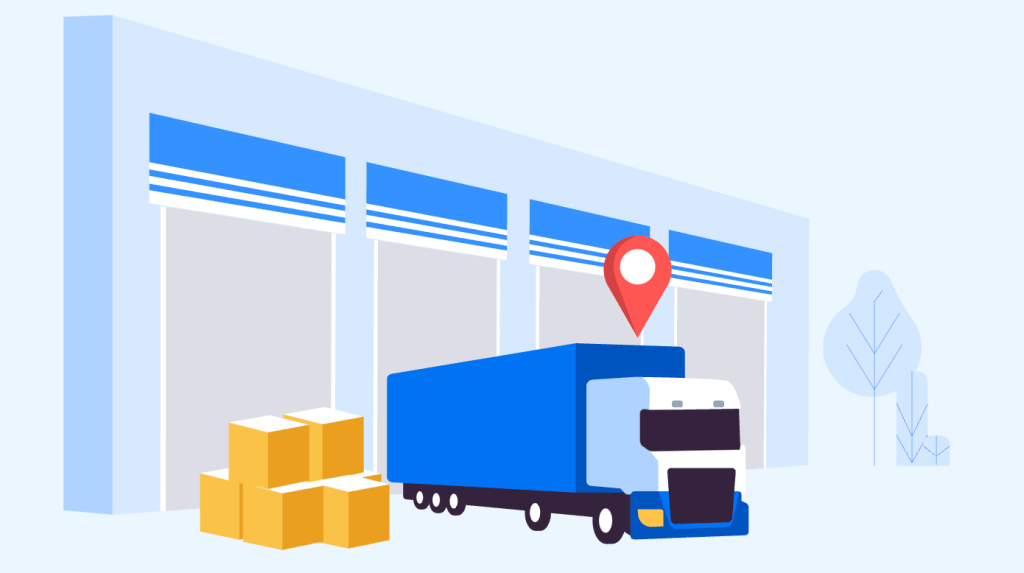
Locus DispatchIQ automates order allocation and route planning using live data on distance, load capacity, and traffic. It removes manual effort and speeds up dispatching.
- Cuts cost per delivery through efficient route sequencing
- Reduces empty miles and boosts vehicle utilisation
- Adjusts routes dynamically when conditions change
2. Real-Time Visibility and Control
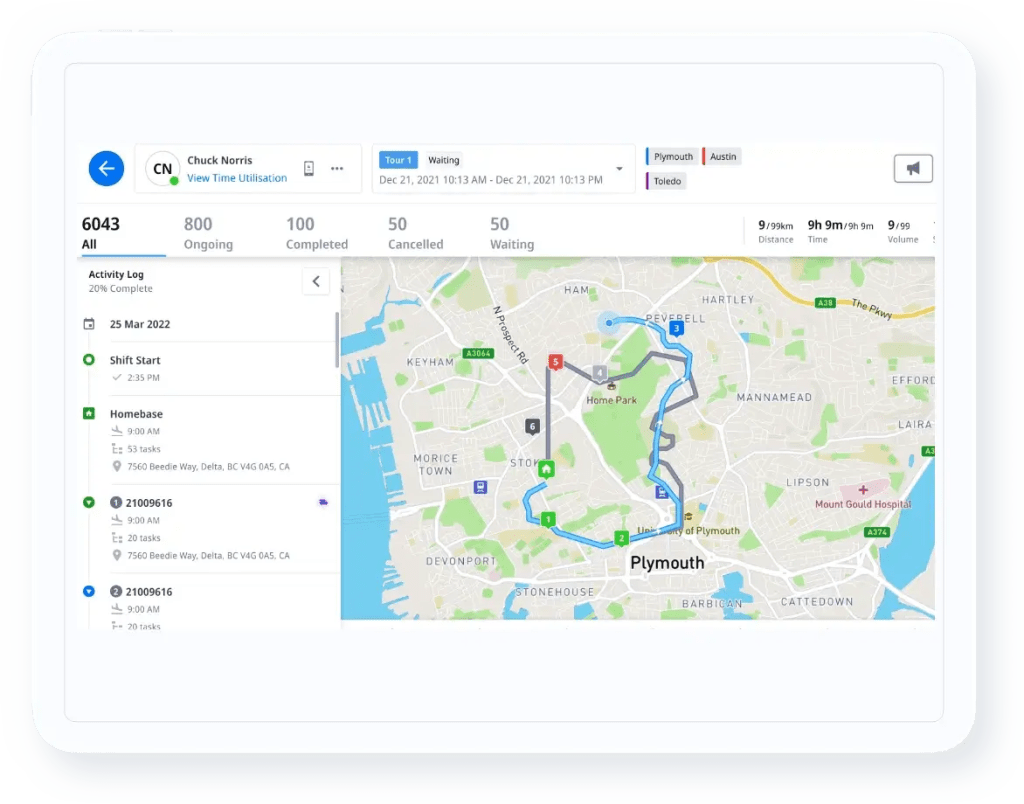
Locus Control Tower gives managers a live view of every shipment, from first mile to last mile. It detects delays early and helps resolve them before they affect SLAs.
- Flags at-risk deliveries and sends instant alerts
- Enables faster exception handling
- Builds customer trust with real-time updates
3. Analytics and Continuous Improvement

Locus converts delivery data into insights that drive improvement. Teams can track KPIs, identify inefficiencies, and forecast future capacity.
- Monitors route deviations and driver performance
- Provides data-backed recommendations for planning
- Reduces hidden costs through performance benchmarking
4. Scalability and Integration
Locus integrates easily with ERPs, CRMs, and e-commerce systems. Its modular design supports omnichannel fulfilment (like warehouse dispatch, store pickup, or third-party logistics).
Locus manages everything from dispatch planning to live tracking and analytics. It helps retailers spot bottlenecks early, act fast, and scale without added complexity.
Read more: E-commerce Logistics – Complete Guide
Case Study: Boosting Efficiency for a Leading Fashion eTailer
A leading fashion e-commerce company in India struggled with delivery delays, human errors, and poor visibility caused by manual sorting and route planning. These issues raised costs and hurt service levels.
How Locus Helped
- Automated Sorting: Locus IntelliSort automated parcel sorting, reducing processing time and errors.
- Accurate Geocoding: Improved address accuracy to 99%, lowering failed deliveries.
- Optimized Routing: Cut sorting time by over 60%, allowing teams to handle more deliveries.
- Smarter Capacity Planning: Improved resource use and delivery reliability during peak demand.
Impact
99% address accuracy, 60% faster sorting, and higher first-attempt delivery success—clear proof that automation and visibility improve e-commerce logistics performance.
Read more: How to Increase Operational Efficiencies in E-commerce
Turn Delivery Complexity into Predictable Performance
Delivering fast is easy; doing it reliably at scale is what challenges e-commerce teams. Missed timelines, manual routing, and poor visibility cause small daily delays that add up to lost revenue and lower customer trust.
The AI-driven platform fixes these issues early. It organizes fragmented delivery systems and connects planning, dispatch, and analytics in one continuous flow. Teams gain real-time control, reduce failed deliveries, and cut costs.
Reliable delivery isn’t a target; it’s a system you design. Book your demo to see how Locus does it.
Frequently Asked Questions (FAQs)
1. What is an e-commerce delivery management system?
It’s a digital platform that automates planning, dispatching, tracking, and analysing deliveries, helping e-commerce businesses improve order accuracy, reduce costs, and provide real-time visibility for customers and operations teams.
2. How does delivery management impact customer experience?
Efficient delivery management ensures on-time deliveries, accurate tracking, and transparent communication—all key factors that influence satisfaction and repeat purchases.
3. What are the signs you need a delivery management system?
Frequent delays, rising delivery costs, or manual dispatching errors indicate it’s time to switch to an automated system.
4. How can e-commerce companies reduce last-mile delivery costs?
Use automated route optimisation and dynamic dispatching tools to minimise fuel usage, idle time, and failed delivery attempts.
5. Why choose Locus for e-commerce delivery management?
Locus combines AI-driven routing, real-time tracking, and analytics in one platform, helping retailers optimise every delivery and turn logistics into a customer retention advantage.

General
8 Best E-Commerce Delivery Management Software in 2025
Nov 25, 2025
Explore top eCommerce delivery management software for faster, more reliable deliveries. Learn why Locus is the top choice.
Read more
General
10 Best Hyperlocal Delivery Management Software in 2025
Nov 27, 2025
Compare 2025’s best hyperlocal delivery management software. Discover leading platforms and how Locus helps brands scale local fulfilment.
Read moreInsights Worth Your Time


SUBSCRIBE TO OUR NEWSLETTER
Stay up to date with the latest marketing, sales, and service tips and news
Why to Consider Delivery Management System for E-Commerce Business