

Delivery Experience
What Is a Delivery Management System? Importance & Features

Key Takeaways
- Modern delivery management requires real-time visibility and precise location tracking to prevent missed deliveries and ensure customer satisfaction in time-sensitive deliveries.
- Route optimization must account for real-world constraints like road closures, traffic patterns, and driver familiarity with specific areas to maintain consistent delivery performance.
- Data analytics and performance tracking help managers set realistic delivery targets, identify operational inefficiencies, and optimize dispatch planning based on historical insights.
- Locus’s dispatch management platform uses machine learning to automate order allocation, optimize routes, and provide control tower visibility while accounting for complex logistical constraints.
I was watching the movie Moneyball when something struck me. I realized that it bore a striking similarity with what today’s delivery managers (or) dispatchers face. But how in the world is it related to a delivery management system?
The sports manager (Brad Pitt) works under severe cost constraints to build a team. Inspite of the issue, he selects the right team members for all matches to deliver good results. He uses a smart sports evaluation method named Moneyball to make this happen.
Similarly, businesses face rising cost pressures while managing last-mile logistics operations. Despite the cost pressures, they assign the right order to the right delivery agent. That is when your delivery management is successful.
But how do you turn a painful delivery management process into a profitable one? The answer lies with a delivery management system. This post explains how a delivery management system contributes to your workforce productivity and leads to last-mile excellence.
What Is Delivery Management?
Delivery management refers to the process of planning, coordinating, and monitoring how goods are transported from a business to its customers. It involves managing every step of the delivery cycle to ensure accuracy, punctuality, and cost efficiency.
In delivery management, businesses typically:
- Plan delivery routes and schedules based on order priorities and locations
- Assign the right drivers or vehicles to each route
- Track deliveries in real time to prevent delays or missed orders
- Collect proof of delivery and customer feedback for performance analysis
- Use data insights to improve future dispatch planning and fleet utilization
Modern logistics relies on delivery management software to automate these operations. Platforms like Locus use automated dispatch optimization software, strategic route planning, and real-time visibility tools to improve routing efficiency and lower operational costs.
In simple terms, delivery management connects people, processes, and technology to create a faster, more reliable last-mile experience for businesses and customers alike.
Why Is Delivery Management Important?
Delivery management is now a core function in logistics. With global e-commerce projected to reach $4.96T by 2025, companies must deliver faster without driving up costs. Poor planning affects both margins and customer loyalty.
For businesses, strong delivery management leads to:
- Quicker turnarounds through smarter route planning and automated dispatch
- Lower cost per shipment with reduced idle time and better resource use
- Higher customer satisfaction driven by accurate ETAs and proactive communication
Beyond business performance, efficient delivery management creates wider benefits:
- Fewer vehicles on the road due to optimized routes and consolidated drops
- Lower fuel consumption, leading to reduced emissions and greener operations
The Six Pillars of Delivery Management
Strong delivery operations depend on six core areas. When applied well, they drive speed, lower cost, improve customer experience, and reduce waste.
1. Route Planning
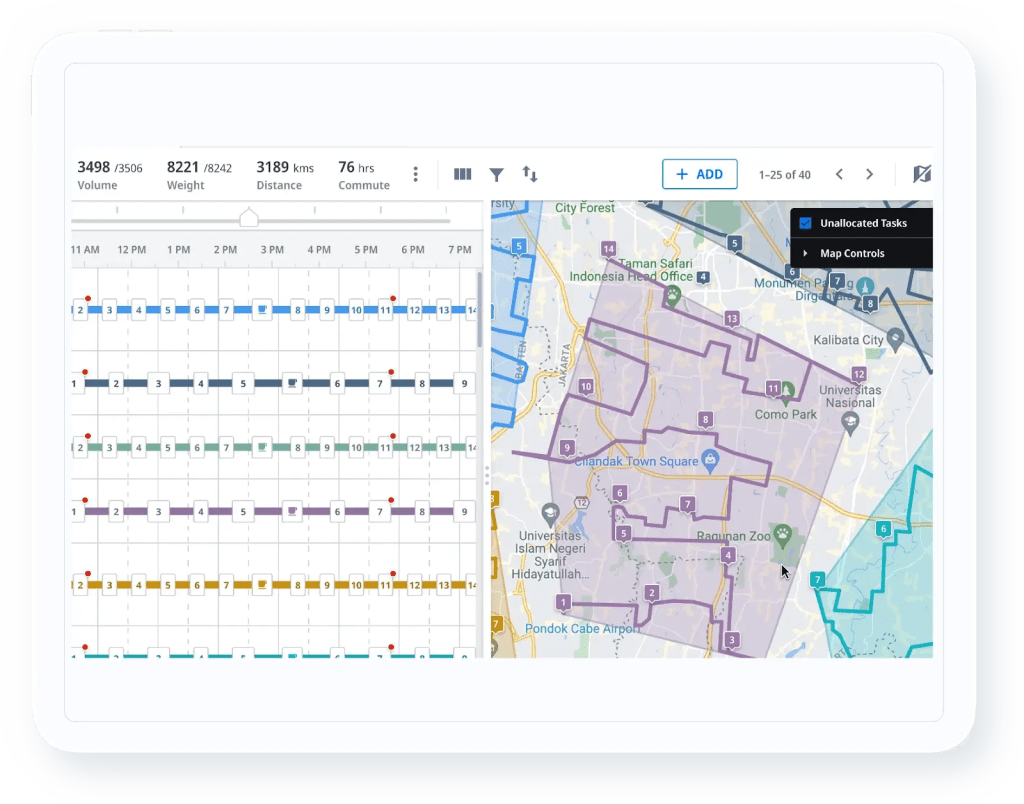
Planning the right delivery order and coverage area cuts distance and lead time. Research shows AI-driven route planning can reduce last-mile cost by up to 35% in dense urban networks.
2. Driver Scheduling
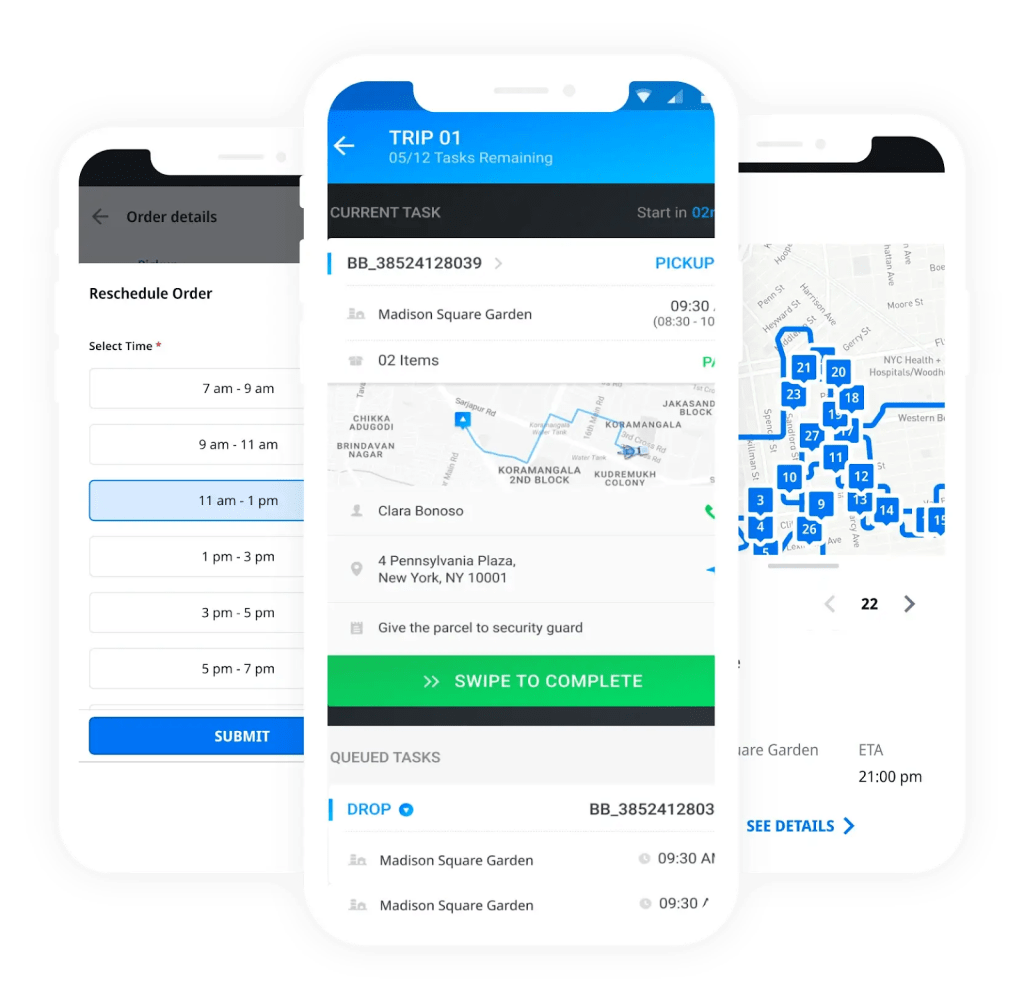
Assigning drivers and vehicles based on volume, geography, and shift rules increases output and reduces idle time. Studies show that better scheduling models built on live data are key to scaling delivery.
3. Dispatch Management
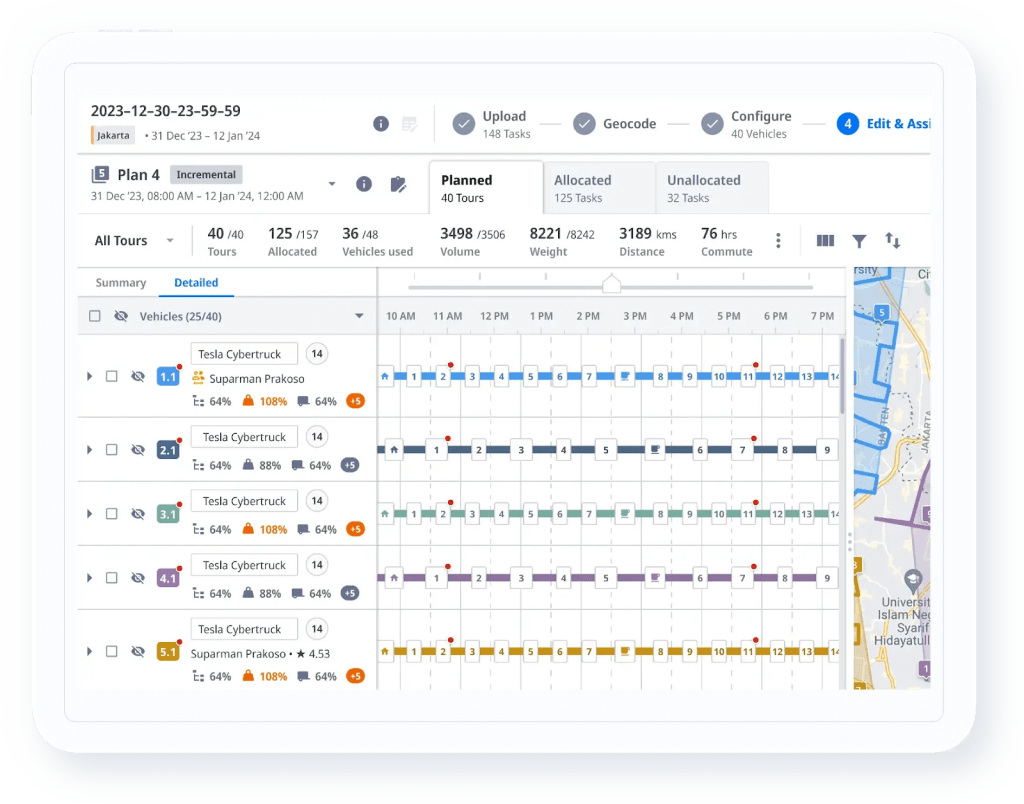
Sending the right loads to the right drivers with live updates is essential. A study on e-commerce operations found that delays and failed deliveries sharply reduce repeat orders.
4. Delivery Tracking

Live tracking of vehicles, orders, and stops allows faster exception handling and better SLA control. Reviews show poor visibility drives more complaints and higher cost.
5. Customer Communication

Clear and timely updates build trust and reduce service friction. McKinsey states that the majority of shoppers stop buying after a poor delivery experience.
6. Cost Control
The last mile accounts for 40–50% of total shipping cost. Research highlights that cost control at this stage is now a strategic requirement.
Features to Look For in a Delivery Management Software

As delivery managers, you deal with many responsibilities, from managing fuel costs to analyzing workforce performance. Apart from knowing the whys of using a delivery management system, it is also essential to know the hows. It is the hows that guide your purchasing decisions. This is the right time to discover the features you should look for in a delivery management platform.
Route optimization
The most critical feature to look for in a delivery management platform is route optimization. Route optimization feature calculates the accurate delivery windows and comes up with a cost-effective delivery route. Its dynamic nature helps you manage the on-time delivery targets for scheduled, on-demand and ad-hoc order requests. Also, it helps you plan routes in a way such that there are no overlaps in delivery routes.
Download whitepaper: Why Businesses Need Route Optimization
Track and Trace
A fleet tracking system ensures that you get a comprehensive view of the vehicles and their routes. Its control tower feature gives you active control to manage the fleet, check driver availability, and understand delivery requests. Providing updates on SLAs enable you to monitor on-ground activities and manage delivery exceptions before they occur.
Fleet tracking software facilitates customers to share their delivery rescheduling preferences, special delivery instructions or pass their delivery feedback. Overall, it offers greater convenience to customers and eliminates miscommunication with them.
Geocoding
Human dependencies in spotting the right address increase shipment processing time. With the help of a geocoding feature, you can avoid this issue. Geocoding engine converts the most improper and inaccurate addresses into exact geographic coordinates. You can avoid wandering around streets and fulfill orders on time by pointing out the precise customer locations.
Order management
Managing orders across different fulfillment models and hybrid fleets is grueling. Dealing with hundreds to thousands of orders daily has made order management indispensable. Through an advanced rule engine, the order management feature automates your workforce on a single unified space. Therefore, it ensures that you seamlessly manage the order lifecycle with minimal manual intervention.
Analytics and Insights
The on-ground and historical data provide you with rich analytical insights on performance gaps. Understanding these performance gaps enables you to effectively set realistic performance targets for your workforce. With its visual representation, the analytics feature helps you identify delivery errors and generate dispatch plans that address these performance gaps.
Stand Out in Your Delivery Management Using Locus!
Like the sports manager in Moneyball, you too have to compete against big names in the last-mile logistics. The investment in the right delivery management software differentiates your performance in the last mile from your competitors.
Now, you have come to the final question, ”From whom should I purchase the delivery management software?”
The Locus dispatch management platform is an integrated solution that helps you perform all delivery management functions, from order management to post-delivery analysis. Its advanced machine learning algorithms ensure that you assign the right orders to fleet drivers and plan the most optimal route. Its control tower feature helps you identify the inconsistencies like SLA breaches and minimize them.
With the help of intuitive dashboards, Locus dispatch management software makes your workforce management simple and effective. Generating dispatch plans for complex circumstances and multiple real-world constraints saves your working time. Hence, it restores your work-life balance and ensures you spend enough time with your loved ones.
Looking to make your delivery management process smart, simple and effective? Try a demo with Locus!
Frequently Asked Questions (FAQs)
What is a delivery management system?
A delivery management system is the process that enables the successful delivery of goods from one location to another. It involves various steps from receiving orders until they reach the customers’ hands. A delivery management software automates, streamlines, and digitalizes these end-to-end last-mile logistics processes, making delivery management possible.
Why do modern enterprises need delivery management software?
Modern customers are unforgiving when it comes to on-time deliveries and expect precision. Delivery management software provides end-to-end visibility into the last mile, helps identify exact customer locations, measures workforce performance, allocates tasks optimally, and improves route planning. This ensures customer satisfaction and efficient operations.
How does delivery management software enable end-to-end visibility?
Delivery management software provides real-time tracking of orders, vehicles, and drivers. It alerts about any delays, route deviations, or missed deliveries. This visibility allows dispatchers to monitor on-ground activities, manage exceptions proactively, and ensure timely deliveries.
How does delivery management software improve route planning?
Delivery management software factors in real-world constraints like road closures, traffic jams, and area restrictions to plan accurate routes. It optimizes routes dynamically, avoids overlaps, and alerts about potential Service Level Agreement (SLA) breaches. This ensures cost-effective and on-time deliveries.
How does Locus’s delivery management platform stand out?
Locus’s dispatch management platform is an integrated solution that automates all delivery management functions from order management to post-delivery analysis. Its machine learning algorithms optimize driver-order allocation and route planning. The intuitive dashboards simplify workforce management, generate dispatch plans for complex scenarios, and restore work-life balance. Locus ensures smart, simple, and effective delivery management.

General
Omnichannel Retailing: Definition, Importance & Challenges

May 30, 2025
Omnichannel retailing is a process that provides seamless, frictionless and unified brand experience across both online and offline channels.
Read more
Last Mile Delivery Optimization
Hyperlocal Delivery: What It Is and How Does It Work?
May 31, 2025
Explore how hyperlocal delivery management software enables retailers and logistics providers to cut costs, boost speed, and improve customer experience.
Read moreInsights Worth Your Time


SUBSCRIBE TO OUR NEWSLETTER
Stay up to date with the latest marketing, sales, and service tips and news
What Is a Delivery Management System? Importance & Features